IHC 5529TMA Carburetor Tractor Antique Mccormick Deering 5645 178VC
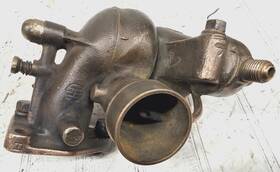
( Brand: Ihc ), ( Manufacturer Part Number: 5529TMA ), ( Engine Type: Hit Miss ), ( Type: Carburetor ), ( Material: Brass )
Review IHC Brass Carburetor Tractor Antique Mccormick Deering
The **IHC 5529TMA carburetor tractor**, originally manufactured by International Harvester Company (later part of Case IH), represents a rare and highly sought-after piece of agricultural engineering from the mid-20th century. This model, specifically designed for the **McCormick-Deering 5645** and **178VC** tractors, embodies the robust yet elegant engineering of the era, blending functionality with timeless craftsmanship. The **5529TMA carburetor** itself is a meticulously constructed component, built to deliver reliable performance under the demanding conditions of farm work. Crafted with precision, it features a **cast-iron body** reinforced with durable gaskets and seals, ensuring long-lasting durability while maintaining optimal fuel efficiency. The carburetor s design incorporates a **floating bowl system**, allowing for smooth fuel flow and minimal clogging, a critical feature for maintaining consistent power in vintage tractors. Its **mechanical fuel pump** and **vacuum-operated throttle linkage** work in tandem to regulate airflow and ignition, providing the steady horsepower required for plowing, hauling, and other heavy-duty tasks. The **TMA designation** suggests a tuned or modified version, potentially offering enhanced performance or compatibility with aftermarket upgrades, making it a prized addition for restorers and enthusiasts aiming to revive classic machinery to peak condition. Whether installed in a **McCormick-Deering 5645**, known for its iconic red-and-yellow paint scheme and versatile power, or paired with the **178VC**, a model celebrated for its durability and adaptability, this carburetor ensures that these agricultural workhorses operate with the same efficiency they did decades ago. For collectors and mechanics, the **IHC 5529TMA** is not just a functional part it s a tangible link to an era when American ingenuity shaped the landscape of modern farming.
### **Pros and Cons of Buying an IHC 5529TMA Carburetor Tractor (McCormick-Deering 5645/178VC)**
#### **Pros**
1. **Historical and Collectible Value** The IHC 5529TMA (International Harvester) and its variants, such as the McCormick-Deering 5645 and 178VC, are classic tractors from the mid-20th century. They hold significant value for collectors, especially those interested in agricultural and vintage machinery history.
2. **Mechanical Simplicity** These tractors feature straightforward mechanical designs, making them easier to repair and maintain compared to modern, electronically controlled models. Many parts are still available through specialty suppliers or can be sourced from other vintage tractors.
3. **Low Operating Costs** Fuel efficiency was a priority in older tractors, and these models typically consume less diesel or gasoline than modern tractors. Maintenance costs are also lower if you have access to the right tools and knowledge.
4. **Versatility in Use** While primarily designed for farming, these tractors can be adapted for various tasks, including light construction, landscaping, or even as stationary generators if modified. Their robust engines and mechanical transmissions make them reliable for heavy-duty work when properly maintained.
5. **Community and Support** There is a strong community of vintage tractor enthusiasts who share knowledge, parts, and restoration tips. Online forums, clubs, and local meetups provide access to expertise and resources that can be invaluable when dealing with older machinery.
6. **Aesthetic Appeal** The classic design of these tractors is often admired for their craftsmanship and historical significance. Owning one can be a source of pride for those who appreciate mechanical heritage.
7. **Potential for Restoration and Customization** Restoring a vintage tractor can be a rewarding project. Many owners enjoy the process of bringing these machines back to working condition, and there are opportunities to customize them with modern upgrades (e.g., updated exhaust systems, modern fuel injectors, or power take-off attachments).
---
#### **Cons**
1. **High Initial Cost** Vintage tractors, especially well-preserved or restored models, can be expensive to purchase. The price may be justified by their collectible value, but budgeting for additional costs (e.g., restoration, transportation, or storage) is essential.
2. **Maintenance and Repair Challenges** While the mechanics are simple, finding skilled mechanics familiar with vintage tractors can be difficult. Parts may require sourcing from specialty suppliers, eBay, or other collectors, which can be time-consuming and costly. Rust, worn-out belts, and outdated components (e.g., carburetors, clutches) often require attention.
3. **Fuel and Emissions Regulations** Older tractors may not meet modern emissions standards, especially if used for commercial farming. Some regions have restrictions on the use of pre-catalytic converters or pre-EPA tractors, limiting their practical applications in certain areas.
4. **Limited Availability of Modern Upgrades** While some parts are still available, others may be obsolete. Upgrading to modern components (e.g., fuel injection systems, electronic ignition) can be difficult or require significant modifications, which may void historical authenticity.
5. **Durability Concerns** These tractors were built with materials and standards from the mid-20th century. Over time, wear and tear such as cracked engine blocks, seized bearings, or degraded rubber components can render them inoperable if not properly maintained. Rust is a common issue, particularly in tractors stored outdoors.
6. **Operational Limitations** Compared to modern tractors, vintage models lack features like power steering, air conditioning, or advanced diagnostics. Operating them requires more physical effort and manual adjustments, which can be tiring over long periods.
7. **Storage and Transportation Issues** Vintage tractors are often large and heavy, requiring secure storage (e.g., a garage or covered area) to protect them from the elements. Transporting them may also be challenging, especially if they are not road-legal or require trailers.
8. **Time-Consuming Restoration** If purchasing a non-running tractor, the restoration process can take months or years, depending on the condition. This requires significant time, patience, and often financial investment before the tractor is usable.
---
### **Ending Conclusion**
Buying a vintage IHC 5529TMA or McCormick-Deering 5645/178VC tractor is a decision that balances historical appeal, mechanical simplicity, and practical utility against higher upfront costs, maintenance challenges, and operational limitations. These tractors are ideal for collectors, hobbyists, or those who appreciate mechanical heritage and are willing to invest time and effort into their upkeep. However, they are not practical for everyday farming or commercial use without significant modifications or restoration work.
For someone seeking a reliable, low-maintenance workhorse, a modern or lightly used tractor would likely be a better choice. But for enthusiasts who value craftsmanship, nostalgia, and the satisfaction of working with a piece of agricultural history, a vintage tractor can be an incredibly rewarding purchase.
---
### **Recommendation**
- **Buy if:**- You are a collector or enthusiast with a passion for vintage machinery.
- You have access to mechanical skills, tools, and a network of experts to assist with repairs.
- You are willing to invest time in restoration and maintenance.
- You plan to use the tractor for occasional light-duty work, displays, or as a hobby project.
- You find the historical and aesthetic value worth the cost.
- **Avoid if:**- You need a tractor for heavy, daily farming work without modifications.
- You lack the budget for potential restoration costs or the patience for a long-term project.
- You prefer modern conveniences like power steering, air conditioning, or easy diagnostics.
- You cannot secure proper storage or transportation for the tractor.
**Final Suggestion:** If you decide to purchase one, thoroughly inspect the tractor s condition (engine, transmission, frame, and body) and consider starting with a "runner" or a tractor that is already in good working order. Joining vintage tractor clubs or forums can also provide guidance on sourcing parts and finding mentors in restoration.
Details:
My parts inventory has grown out of control, so set a reminder to check back frequently for new listings. The brass nut on the bottom will need heat to remove check inside. The Fine Print. I have been collecting hit miss engines for 35 years and am very knowledgeable.
Please feel free to call me with questions. See photos for further. For example, if my measurements are wrong, I would take it back. IHC Brass Carburetor Part numbers: 5529TMA 5645 178VC.
Condition: Due to age this item is being sold AS IS. If you decide don't want it or find another one cheaper, I won't take back. All the images are original scans of actual item being sold.
part #: 5529tma prices
- $99.00-$119.00
specifications stationaryenginezo:
- brand: Ihc
- mpn: 5529tma
- engine type: Hit Miss
- type: Carburetor
- material: Brass
general stationaryenginezo:
- condition: For parts or not working
- Light Equipment Tools > Stationary Engines > Parts
seller stationaryenginezo:
- rating: 100.0%
- city: Orient, Ohio
- # reviews: 3590
shipping stationaryenginezo:
- service: USPS Ground Advantage, USPS Priority Mail Medium Flat Rate Box, USPS Priority Mail
- class: Standard, Expedited
- carrier: USPS
- type: Calculated
- cost: $22.55
- transit: 3-9 Days
payments stationaryenginezo:
- credit card: Visa
- other
- wallet: Apple-pay
offer stationaryenginezo:
- availability: In Stock
- sold: 0
- quantity: 1
- options: Ship-to-home
- started: April 28, 2026
returns stationaryenginezo:
- policy: No Returns
Ihc 5529TMA Is Similar To:
- Kw Farm Engine Ihc Magneto Tractor Nice Hit 10-20 Titan (35.9% similar) It is missing the cover that goes over the magnets. Take a look at the pictures and decide for yourself, they don't get much nicer than this. No reserve so bid to win. I tested it for spark and didn't get any, I'm sure all it probably needs is a good points filing, I never even took the points cover...(January 18th, 2015)
- 10386 Zenith Old Ihc Farmall Super Tractor Carburetor Wow (33.8% similar) There are no cracks, breaks, or repairs that I can see know of other than a small area weld where the fuel line goes into it. There is very little wear on the choke shaft but some throttle. It mounts with two holes inches apart on center. I can always be reached at if you'd like to talk about it. ...(January 7th, 2019)
- 1708-d Ihc Original Mccormick Deering Tractor Brass Water Injection Carburetor (34.4% similar) Let the pictures be your guide. It mounts with two holes inches apart on center. It seems to be in excellent condition with no cracks, breaks, or repairs of any kind. I can always be reached at 193ONE if you'd like to talk about it. These original water carburetors are quite tough to find in the ...(February 28th, 2018)
- Mogul Tractor Ihc Engine Gas 2176t Tag (32.4% similar) Casting is made of brass, I will let new owner polish if so desired...(March 8th, 2015)
- 2278a Ihc Vtg Flat Belt Pulley Mccormick Corn Sheller Hit Miss (43% similar) I think it may have been used in other applications as well. Offered is a cast-iron flat belt pulley marked Ihc and 2278A. Measures about inches across with a 3-INCH driving face. Glad to combine ship if possible. I do my best to keep shipping as low and safe possible. Using online resources I found...(April 30th, 2018)
- Ignition Tractor Ihc 574 454 C200 4-cylinder Electronic Conversion Ih 544 674 (25.3% similar) Fast, priority shipping. Recommended for use with internal resistor coil. This distributor was used on various tractors such as the 454, 464, 544, 574, 674, and stock photo, there may be slight cosmetic differences. Cap and rotor are for reference only and are not included as part of this listing. ...(January 12th, 2015)
- 6hp 9759 T Ihc International Mccormick Deering Hand Start Crank (39.7% similar) The hole pivot moves as it should, casting of that part is rough in a spot, but appears to have been factory so should nt effect usage. The crank handle seems in good shape, numbers are very clear on hand grab swivel, arm, and hole pivot...(February 10th, 2019)
- 91542 Pertronix Electronic Ignition Conversion Ih Ihc Tractor (16.4% similar) This distributor was used on various tractors such as the 454, 464, 544, 574, 674, and note: your must have a cap rotor like shown in second picture, if you different please for details how to update. This module is designed to shut down in the event key left on when engine not running. Stock photo...(January 23rd, 2019)
- 9181-d 9182-d Ihc Mccormick Original 3 To (33.3% similar) One pair of rocker arms for Ihc model lb 3 to 5HP engine, parts 9181-D, 9182-D, in great original shape...(December 30th, 2016)
- 944t Ihc Nice Mccormick Deering (46.2% similar) I will combine shipping. I will do my best to box pack everything, as would want receive it. Selling as is. Part 944T measures 5 in DOA. 50 shipping in the USA. Flat rate of used parts are getting hard to find in any condition let alone as nice at this. This item weighs 6 lbs. I am a real person com...(March 31st, 2017)
- 9604 International Harvester Ihc Mccormick (22.6% similar) I ship fast. I ship fast. Crank bearings for an Ihc horse hit and miss. There appears to be both grease build up and some rust oxidation on the bearings, especially bottom one, as noted in photos. The bearing measures 3 inches long. Measures about across...(April 1st, 2017)