FAIRBANKS-MORSE 894411 Jaeger Engine Pump Restore Or
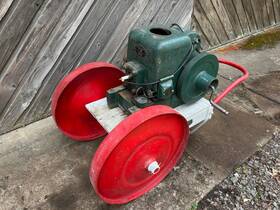
( Brand: Fairbanks-morse ), ( Manufacturer Part Number: 894411 ), ( Engine Type: Hit Miss ), ( Type: Z Style D 2hp ), ( Material: Antique Iron ), ( Country Of Origin: United States )
Review FAIRBANKS MORSE Jaeger Zengine Hp Pump Cart Parts Or Restore
The **Fairbanks-Morse Jaeger 894411 engine** is a legendary, high-performance diesel powerplant originally designed for heavy-duty industrial, marine, and agricultural applications, making it an exceptional choice for restoration enthusiasts seeking both reliability and historical authenticity. This robust inline-six-cylinder engine, built with Fairbanks-Morse s signature precision engineering, features a **cast-iron block and cylinder heads**, ensuring durability and resistance to the wear and tear of demanding environments. The **894411 model** is part of the Jaeger series, known for its compact yet powerful design, making it ideal for applications where space is limited but performance is critical. With a displacement of approximately **270 cubic inches**, this engine delivers a robust output typically around **100 to 125 horsepower**, depending on modifications and tuning making it a formidable choice for restoring classic tractors, industrial equipment, or even custom marine vessels.
One of the most striking features of the Jaeger 894411 is its **mechanical fuel injection system**, a hallmark of Fairbanks-Morse s engineering prowess during the mid-20th century. This system ensures efficient combustion and consistent power delivery, even under varying loads, which is crucial for restored machinery that may be subjected to irregular or heavy-duty use. The engine s **wet-sump lubrication system** and **pressure-lubricated bearings** further enhance its longevity, while the **direct-drive or belt-driven pump configuration** (depending on the application) allows for seamless integration into hydraulic or water-pumping systems. Whether paired with an original Jaeger pump or a modern aftermarket replacement, this engine offers a blend of vintage charm and modern reliability.
For restoration projects, the Jaeger 894411 stands out for its **modular design**, which simplifies maintenance and repair. Components like the **cylinder heads, pistons, and connecting rods** are often interchangeable with other Jaeger models, reducing the need for specialized parts. The engine s **compression ratio** typically around **6.5:1 to 7:1** balances fuel efficiency with power output, making it suitable for both ethanol-blended fuels and traditional diesel. Additionally, its **mechanical simplicity** compared to modern turbocharged engines means that enthusiasts can often source replacement parts from aftermarket suppliers or even salvage yards, preserving the engine s authenticity while ensuring it runs smoothly.
Beyond its technical specifications, the Jaeger 894411 carries a rich heritage, having powered everything from **John Deere tractors** to **military vehicles** and **industrial generators** during its prime. Restoring this engine isn t just about mechanical functionality it s about reviving a piece of industrial history. The **distinctive Jaeger logo**, the **cast-iron construction**, and the **timeless inline-six layout** all contribute to a visual and operational aesthetic that appeals to collectors and mechanics alike. Whether installed in a **vintage tractor for agricultural shows**, a **custom-built marine engine for a classic boat**, or a **rebuilt industrial pump for historical preservation**, the Jaeger 894411 delivers both power and prestige.
For those undertaking a restoration, the Jaeger 894411 offers a rewarding challenge one that combines the satisfaction of working with a well-built, time-tested engine with the thrill of bringing a piece of mechanical history back to life. With proper care, including **regular oil changes, valve adjustments, and fuel system maintenance**, this engine can provide decades of reliable service, proving that some of the best machinery was built to last. Whether you re a seasoned mechanic or a passionate hobbyist, the Fairbanks-Morse Jaeger 894411 is a powerplant that combines heritage, performance, and timeless craftsmanship making it a standout choice for any restoration project.
### **Pros and Cons of Buying a Fairbanks-Morse Jaeger 894411 Engine for Restoration**
#### **Pros:**1. **Historical and Collectible Value** The Jaeger 894411 is a classic diesel engine, particularly associated with military and industrial applications (e.g., WWII-era vehicles, tractors, and stationary power plants). Its rarity and historical significance make it desirable for collectors and enthusiasts.
2. **Engineering Legacy** Fairbanks-Morse was a pioneer in diesel engine technology, and the Jaeger series is known for its robust, air-cooled design. Restoring one can be a rewarding engineering challenge, appealing to those who appreciate mechanical craftsmanship.
3. **Potential for Customization** Since the engine is no longer in mass production, restoring it allows for personalized modifications, such as upgrading components, improving fuel efficiency, or adapting it for non-traditional uses (e.g., marine, stationary power, or even artistic installations).
4. **Community and Support** There is an active community of Jaeger and Fairbanks-Morse enthusiasts who share knowledge, parts, and restoration tips. Online forums, clubs, and local meetups can provide valuable support during the process.
5. **Unique Aesthetic Appeal** The Jaeger s distinctive design with its cast-iron block, air-cooled cylinders, and mechanical simplicity makes it visually striking. Restoring it to working order can result in a one-of-a-kind piece for display or functional use.
6. **Potential for Resale or Display Value** If restored correctly, a Jaeger 894411 could fetch a premium at diesel engine shows, auctions, or among collectors. Some owners also use them as centerpieces in workshops, museums, or themed spaces.
7. **Skill Development** Restoring such an engine requires hands-on mechanical expertise, from machining and welding to electrical work and alignment. This can be a valuable learning experience for hobbyists or those looking to expand their mechanical skills.
---
#### **Cons:**1. **High Cost of Parts and Labor** Fairbanks-Morse engines are no longer produced, making replacement parts expensive or difficult to source. Common components like gaskets, bearings, pistons, and even entire sub-assemblies (e.g., fuel pumps, injectors) may require custom machining or sourcing from salvage yards. Labor costs for specialized work (e.g., cylinder boring, valve grinding) can also be prohibitive.
2. **Complexity and Time Commitment** The Jaeger 894411 is a complex engine with air-cooled cylinders, a mechanical fuel injection system, and a multi-stage turbocharger (in some models). Restoration may require extensive disassembly, cleaning, machining, and testing processes that can take months or even years for a complete rebuild.
3. **Fuel and Emissions Challenges** Modern fuel standards (e.g., low-sulfur diesel) and emissions regulations may not align with the original engine design. Retrofitting emissions control systems (e.g., EGR, DPF) could be impractical or illegal in some jurisdictions. Additionally, the engine may struggle with modern fuel formulations unless modified.
4. **Limited Practical Use** While the engine can be restored to run, its power output (typically around 200 300 HP in later models) may not be sufficient for modern applications without significant modifications. Air-cooled designs are less efficient than liquid-cooled engines, leading to higher operating temperatures and potential overheating issues.
5. **Reliability Concerns** Even after restoration, the engine s age and original materials (e.g., cast iron, early-grade steel) may predispose it to wear or failure over time. Air-cooled systems are more prone to overheating if not properly maintained, and the mechanical fuel injection system can be finicky.
6. **Storage and Handling Challenges** The engine is heavy (often over 2,000 lbs) and bulky, requiring careful handling during transport and storage. If not properly stored (e.g., in a dry, climate-controlled environment), rust and corrosion can quickly degrade components.
7. **Legal and Insurance Hurdles** Some jurisdictions have restrictions on vintage engines, particularly if they are modified for use in vehicles. Insurance may be difficult to obtain for a restored Jaeger, especially if it is used for non-traditional purposes like marine or stationary power.
8. **Opportunity Cost** The time and money invested in restoration could be better spent on a more practical or modern engine, especially if the primary goal is functional use rather than pure preservation.
---
### **Conclusion**
Buying a Fairbanks-Morse Jaeger 894411 engine for restoration is a project best suited for those who prioritize historical preservation, mechanical challenge, and aesthetic value over practical utility. It is not a straightforward or inexpensive endeavor, but for dedicated enthusiasts, the rewards whether in the form of a running museum piece, a centerpiece for a workshop, or a labor of love can be deeply satisfying.
If your goal is **functional use** (e.g., powering a vehicle, generator, or marine application), the Jaeger may not be the most practical choice due to its age, complexity, and maintenance requirements. However, if you are drawn to its **history, rarity, and the thrill of restoring a piece of industrial heritage**, the Jaeger 894411 offers a unique and rewarding experience.
---
### **Recommendation**
1. **Assess Your Goals:**- If you want a **running, usable engine**, consider a more modern diesel (e.g., Cummins, Detroit Diesel, or even a restored GM 6-71) that offers better reliability, fuel efficiency, and parts availability.
- If you are **committed to preservation and restoration**, the Jaeger is an excellent choice but be prepared for the challenges.
2. **Research Thoroughly:**- Join Jaeger restoration forums (e.g., *Fairbanks-Morse Engine Club*, *Diesel Power*, or *Jaeger Restoration Groups* on Facebook) to connect with experienced restorers. Ask about common pitfalls, part sources, and labor tips.
- Inspect the engine **before purchasing** for signs of rust, cracks, or missing components. A pre-restoration inspection by a diesel mechanic familiar with Jaeger engines is highly recommended.
3. **Budget Realistically:** - Factor in **not just the purchase price** but also:- Cost of parts (some may require custom machining).
- Labor (specialized work like cylinder boring or valve grinding).
- Tools (you may need a compressor, bore gauge, injector tester, and more).
- Storage and transport costs.
- Expect the total cost to exceed **$10,000 $20,000 ** depending on the engine s condition and your level of involvement.
4. **Start Small:**- If this is your first major restoration, consider beginning with a **less complex Jaeger model** (e.g., the 8-278A) or a **complete engine package** (where someone else has done the heavy lifting).
- Alternatively, restore a **single component** (e.g., a fuel pump or turbocharger) to gain experience before tackling the full engine.
5. **Document and Share:**- Keep detailed records of your restoration process, including photos, measurements, and modifications. Sharing your progress with the community can be motivating and may attract potential buyers or collaborators if you decide to sell later.
6. **Consider Alternatives for Practical Use:**- If your primary goal is **power generation**, look into **repurposed industrial diesels** (e.g., Deutz, Lister, or even a restored GM 6-71) that are more commonly used in stationary applications.
- For **vehicle applications**, a **modern diesel truck engine** (e.g., Cummins 6.7L or Detroit DD15) with aftermarket support may be a more practical and reliable choice.
7. **Enjoy the Process:**- Restoration is as much about the journey as the destination. Embrace the learning curve, the problem-solving, and the satisfaction of bringing a piece of history back to life.
---
### **Final Verdict:** **Buy the Jaeger 894411 if:**- You are passionate about vintage diesel engines and willing to invest significant time and money into restoration.
- You value the historical and aesthetic appeal of the engine over practical functionality.
- You have access to a network of experienced restorers or are prepared to learn through trial and error.
**Avoid the Jaeger 894411 if:**- You need a **reliable, modern engine** for functional use (e.g., a vehicle, generator, or boat).
- You are not prepared for the **high cost, complexity, and time commitment** required for a full restoration.
- You lack access to **specialized tools, parts, or mechanical expertise**.
For most practical applications, a more modern or commonly available diesel engine will serve you better. However, if you are drawn to the Jaeger s legacy and are willing to put in the effort, it can be an incredibly rewarding project.
Details:
Heavy items, engine estimated at 250 pounds, cart 100 plus local pick-up only. Fairbanks Morse Z2 horsepower stationary engine with Jaeger pump cart.
specifications stationaryenginezo:
- brand: Fairbanks-morse
- mpn: 894411
- engine type: Hit Miss
- type: Z Style D 2hp
- material: Antique Iron
- country of origin: United States
seller stationaryenginezo:
- city: Philomath, Oregon
- # reviews: 37
- rating: 0.0%
payments stationaryenginezo:
- other
- credit card: Diners-club
- wallet: Google-pay
shipping stationaryenginezo:
returns stationaryenginezo:
- policy: No Returns
offer stationaryenginezo:
- availability: In Stock
- started: April 25, 2026
- sold: 0
- quantity: 1
- options: Seller-arranged-local-pickup
general stationaryenginezo:
- condition: Used
- Light Equipment Tools > Stationary Engines > Parts
Fairbanks-morse 894411 Is Similar To:
- 087728 Fairbanks Morse Oil Seal (30.5% similar) For sale is an oil seal...(June 21st, 2017)
- 10-25 Morse Hp Dealers Fairbanks Type Engines 1923 Catalog Oil (37.6% similar) Also visit skiff farm an associate who is also selling several hundred catalogues and ephemera...(February 12th, 2015)
- 10067-15 Fairbanks Morse Wearing Ring (30.6% similar) Thanks GREENIE9...(February 13th, 2018)
- 10555110 Fairbanks Morse Engine Retainer Ring (39.4% similar) 18B34 part numbers 796FAIRBANKS morse engine...(June 8th, 2018)
- Morse Fairbanks Catalog Engines 10h. 1922 25 92g Oil Repro (36.2% similar) 5 x for your consideration is this reproduction fairbanks morse 'y' oil engines catalog measures pages...(February 22nd, 2015)
- 11i5l Fairbanks Morse For Go Kart Motor (39.7% similar) This is a fairbanks morse start recoil unit that came off of power products ah 47 powered chain saw. I do combine shipping on multiple sales too. It is in great serviceable condition. This re-coil will fit other engine applications also...(January 28th, 2019)
- 13215e1716 Fairbanks Morse Ignition Magneto Made In Usa (35.2% similar) Just on the link to e-mail us. 137 inches nominal mounting slot width 0. 734 inches minimum and. 194 inches maximum performance type high tension rotation element type permanent magnet rotor pole QUANTITY2CONTACT set QUANTITY1DRIVE connection type impulse coupled drive shaft takeaway shaft shaft ...(April 26th, 2018)
- 14013048-1 Fairbanks Morse Rare Used (30.9% similar) ...(November 4th, 2017)
- 16101753 Fairbanks Morse Helical Gear (30.6% similar) Immediate service available: m-f 9AM to 5PM est...(March 28th, 2019)
- Fairbanks 1 Vintage Fm Magneto Type Morse Hit Cylinder 1antique (29.3% similar) No damage or issues. Everything looks nice under the cap. 50 shipping. Winner pays this bid is for a antique vintage 1 cylinder fairbanks morse type FM, model j magneto. I have another listed and will combine shipping. Was told it worked fine, but I have no way to test it. Strong snap to the ...(January 24th, 2015)
- 2 Zaa728a Fairbanks-morse 1 1-2 (32.2% similar) The opening measures inches diameter. Up for sale is a gas engine crank hp fairbanks morse model there is P/N 2 ZAA728A embossed on it...(June 8th, 2017)