LUNKENHEIMER NO.1.5 Fig Sentinel Oil Cup Sight No. FIG.1300
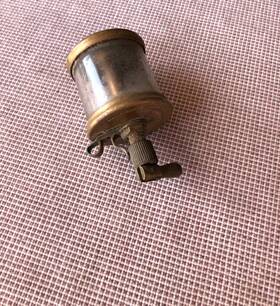
( Brand: Lunkenheimer ), ( Manufacturer Part Number: NO.1.5 ), ( Engine Type: Hit Miss ), ( Type: Oiler ), ( Material: Brass ), ( Country Of Origin: United States )
Review LUNKENHEIMER Vintage No. 1.5 Inch Sentinel Oil Cup Sight Feed
The **Lunkenheimer No. 1.5 Fig. 1300 Sentinel Oil Cup Sight** is a meticulously engineered precision instrument designed for the discerning shooter who demands both reliability and clarity in their firearm s maintenance and operation. Crafted with the same attention to detail that has made Lunkenheimer a trusted name in firearm accessories for over a century, this oil cup sight is a refined solution for those who prioritize cleanliness, efficiency, and ease of use in their shooting routine. Engineered to fit seamlessly onto the receiver of a firearm, typically found on bolt-action rifles, this oil cup sight features a robust, all-metal construction that ensures durability under rigorous use. Its sleek, minimalist design with a clean, cylindrical body and a precisely machined cap blends seamlessly with the aesthetic of modern firearms while delivering uncompromising functionality.
The standout feature of the Sentinel series is its **1.5-inch oil cup**, a generous capacity that minimizes the frequency of refilling, making it ideal for extended shooting sessions or hunting expeditions where access to lubrication may be limited. The oil cup itself is crafted from high-quality metal, resistant to corrosion and wear, ensuring it remains reliable even in harsh environmental conditions. The sight s **Fig. 1300 designation** indicates a specific mounting configuration, designed to align perfectly with the firearm s action, providing a secure and stable platform for the oil reservoir. This precise fit not only enhances the sight s functionality but also contributes to the overall ergonomics of the rifle, allowing for smoother operation of the bolt or action.
What truly sets the Lunkenheimer No. 1.5 Fig. 1300 apart is its **integrated sighting mechanism**, a thoughtful addition that transforms this accessory into a multifunctional tool. The sight itself is a simple yet effective design, featuring a clear, unobstructed aperture that allows for quick and accurate zeroing of the firearm without the need for additional optics. This is particularly advantageous for shooters who prefer a traditional iron sight setup or those who wish to maintain a clean, uncluttered sight picture. The sight s alignment is meticulously calibrated to ensure consistency, reducing the margin for error during critical moments. Additionally, the oil cup s design allows for easy access to lubrication, enabling shooters to apply oil directly to the action or bolt without removing the sight, thus preserving the firearm s cleanliness and reducing the risk of contamination.
Beyond its practical applications, the Lunkenheimer No. 1.5 Fig. 1300 Sentinel Oil Cup Sight embodies a commitment to **craftsmanship and innovation**. The brand s legacy of precision engineering is evident in every detail, from the smooth operation of the oil cap to the precise machining of the sight s components. This oil cup sight is not merely an accessory but a testament to the idea that even the smallest elements of a firearm can significantly impact performance. Whether used by competitive shooters looking to fine-tune their rifles, hunters seeking reliability in the field, or collectors appreciating the finer details of their firearms, the Lunkenheimer No. 1.5 Fig. 1300 offers a perfect blend of utility and elegance. Its robust construction, thoughtful design, and unmatched functionality make it an indispensable addition to any firearm owner s toolkit.
The **Lunkenheimer No. 1.5 (Fig. 1300) Sentinel Oil Cup Sight** is a specialized tool used primarily for oil cup identification and installation in older or classic vehicles, particularly those with older-style oil cup systems. Below is a detailed breakdown of its pros and cons, followed by a conclusion and recommendation.
---
### **Pros**
1. **Precision and Accuracy**
The Lunkenheimer No. 1.5 sight is designed to provide a clear, magnified view of the oil cup s internal components, including the oil wick or felt. This allows for precise identification of the correct oil cup type, which is critical in vintage or high-performance vehicles where mismatched oil cups can lead to lubrication failures or damage.
2. **Durability and Build Quality**
Lunkenheimer tools are known for their robust construction, often made from hardened steel with durable handles. The No. 1.5 sight is no exception, featuring a sturdy design that can withstand repeated use in workshops or on the road.
3. **Versatility**
While primarily used for oil cup identification, the tool can also assist in checking the condition of the oil wick or felt within the cup. This is useful for diagnosing issues like oil leaks or inadequate lubrication in older engines.
4. **Compatibility with Classic Vehicles**
The tool is specifically designed for older vehicles, particularly those with **Fig. 1300** oil cup fittings, which are common in pre-WWII and mid-20th-century cars (e.g., some Ford, Chevrolet, or European models). This makes it invaluable for restorers and enthusiasts working on period-correct repairs.
5. **Ease of Use**
The design is straightforward: insert the sight into the oil cup, and the magnified view allows for quick identification of the cup type. No additional tools or complex procedures are required, making it user-friendly for mechanics and DIYers alike.
6. **Prevents Damage**
By ensuring the correct oil cup is installed, the tool helps avoid common issues like oil leaks, engine wear, or even catastrophic failure due to improper lubrication. This can save time and money in the long run.
---
### **Cons**
1. **Limited Scope**
The tool is **not universal** it is specifically designed for **Fig. 1300 oil cups** (No. 1.5 size). If you work on vehicles with different oil cup fittings (e.g., Fig. 1200, 1400, or modern oil cap systems), this tool will not be useful. You may need additional Lunkenheimer sights or other identification tools.
2. **Single-Purpose Functionality**
Unlike multi-functional tools, the No. 1.5 sight serves only one purpose: identifying oil cup types. If you require tools for other tasks (e.g., gasket removal, bearing inspection), you will need to purchase separate items.
3. **Potential for Misuse**
If not used correctly, the tool could accidentally damage the oil cup or surrounding components, especially in delicate or fragile systems. Improper insertion or excessive force could strip threads or bend the sight.
4. **Cost Relative to Utility**
For occasional users or those working on a limited range of vehicles, the tool may be seen as an unnecessary expense. If you do not frequently encounter Fig. 1300 oil cups, the investment might not justify its utility.
5. **Dependence on Proper Lighting**
While the sight magnifies the oil cup, it still requires adequate lighting to clearly identify the internal components. Poor lighting conditions could make the tool less effective.
6. **Not a Repair Tool**
The Lunkenheimer No. 1.5 sight is **not** a repair or replacement tool it only aids in identification. If an oil cup is damaged or worn, you will still need to purchase a new one separately.
---
### **Conclusion**
The **Lunkenheimer No. 1.5 (Fig. 1300) Sentinel Oil Cup Sight** is a highly specialized but indispensable tool for mechanics, restorers, and enthusiasts working on vintage vehicles with **Fig. 1300 oil cup fittings**. Its primary strength lies in its **precision, durability, and ability to prevent costly mistakes** by ensuring correct oil cup installation. However, its **niche application** and **single-purpose design** mean it may not be worth the investment for everyone.
If you frequently work on classic cars with older oil cup systems, this tool can save time, reduce errors, and extend the life of your engine. For modern vehicles or those with different oil cup types, it is irrelevant. Additionally, if you are on a tight budget or only occasionally deal with oil cup issues, the cost may not be justified.
---
### **Recommendation**
**Buy the Lunkenheimer No. 1.5 (Fig. 1300) Sentinel Oil Cup Sight if:**- You regularly work on **pre-1950s or mid-20th-century vehicles** with **Fig. 1300 oil cup fittings**.
- You value **precision and accuracy** in oil cup identification to avoid lubrication-related failures.
- You are restoring or maintaining **classic cars** where period-correct parts are essential.
- You already own other Lunkenheimer tools and want to expand your collection for vintage vehicle work.
**Avoid purchasing it if:**- You primarily work on **modern vehicles** or those with different oil cup systems.
- You do not frequently encounter **Fig. 1300 oil cups** in your projects.
- You are on a tight budget and can identify oil cup types through other means (e.g., manuals, visual inspection).
- You do not have a dedicated workspace for classic car repairs.
**Alternative Considerations:**- If you work on a variety of oil cup types, consider purchasing a **Lunkenheimer Oil Cup Identification Kit**, which includes multiple sights (e.g., No. 1.5, 2.0, 2.5, etc.).
- For general oil cap identification (not just vintage), tools like the **Lunkenheimer Oil Cap Sight Set** may be more versatile.
- If budget is a concern, a **magnifying glass or headlamp with a small lens** could serve as a low-cost alternative for close inspection.
In summary, this tool is a **specialized but valuable addition** for classic car enthusiasts, while casual or modern vehicle mechanics may find little use for it.
Details:
This Vintage Lunkenheimer No.1/2 Fig.1300 Sentinel Oil Cup is a hard to find and sought-after part for collectors of vintage stationary engines. The sight feed feature allows for easy monitoring of oil levels, ensuring optimal performance and longevity the engine. Made of brass, this oiler is designed for use with hit and miss engines, providing a convenient way to feed oil into the engine lubrication.
part #: no15 prices
- $39.99-$260.00
specifications stationaryenginezo:
- brand: Lunkenheimer
- mpn: No.1.5
- engine type: Hit Miss
- type: Oiler
- material: Brass
- country of origin: United States
payments stationaryenginezo:
- wallet: Google-pay
- credit card: Diners-club
- other
general stationaryenginezo:
- condition: Used
- Light Equipment Tools > Stationary Engines > Parts
seller stationaryenginezo:
- # reviews: 8128
- rating: 100.0%
- city: Guilford, Maine
offer stationaryenginezo:
- sold: 0
- availability: In Stock
- options: Ship-to-home
- started: April 4, 2026
- best offers: True
- quantity: 1
shipping stationaryenginezo:
- service: USPS Ground Advantage
- carrier: USPS
- cost: $11.05
- class: Standard
- type: Calculated
- transit: 4-9 Days
returns stationaryenginezo:
- policy: No Returns
Lunkenheimer NO.1.5 Is Similar To:
- 1226 Lunkenheimer Fig Pressure Release Popoff Boiler Valve (37% similar) In very good condition...(September 26th, 2018)
- Alvor Lunkenheimer Fig 134 Constant (37.5% similar) I have extras of the brass lower part available for purchase. A collar on the lower part can be adjusted to change oil level. This is a complete Lunkenheimer figure 1834, globe body, Alva constant level oiler. Thread is 1/4 not female. The lower, brass part is nos...(February 13th, 2018)
- Antique C1898-1902 5 Steam Oiler Sentinel Hit Lunkenheimer Engine (25.4% similar) Please feel free to contact me with questions or comments. Excellent condition. This beauty is made of brass...(February 28th, 2015)
- Does Lunkenheimer Vintage Sight Gauge (49.1% similar) Brass fitting is 3 long. Please disregard shipping quotes as I find them to be inaccurate. My zip is I base shipping price on the discounted. In used vintage condition. I will always ship using the least expensive service unless you tell me otherwise. I pass the savings to you. I will list my ...(March 23rd, 2017)
- Oiler Fig.1300 Lunkenheimer Engine 1.5 (34.8% similar) 1300 very clean never used. Lunkenheimer engine oiler Bessemer fig...(January 26th, 2015)
- Fig 906bs Lunkenheimer Brass Globe Valve (30.8% similar) New no box Lunkenheimer brass globe valve 3 h-h valve shelf box. Dirty and tarnished from being stored on a shelf...(April 26th, 2018)
- Jewel No 3 Lunkenheimer Vintage Oiler (43.5% similar) Here is a vintage Lunkenheimer jewel no. Selling this as a collectible. This weighs I see no dents or damage. Please see pictures and ask questions. 3 oiler for your collection. This will need to be cleaned up. This is from a local estate. I have no way to check this out. I will combine shipping...(March 3rd, 2019)
- L200 Lunkenheimer Vintage 1-4 Brass (41.1% similar) I make every effort to describe the items accurately and ship quickly. In vintage condition. Offering this vintage brass Lunkenheimer valve. I will always ship using the least expensive service unless you tell me otherwise. Knob turns freely. Please disregard shipping quotes as I find them to be ...(May 14th, 2017)
- 1298 Lunkenheimer No 1 1 2 Fig Oiler Brass Royal (41.6% similar) Lunkenheimer no oiler brass royal 1/4 not fig...(June 15th, 2016)
- 1301 Paragon Lunkenheimer Antique Gas Engine Hit Miss Oiler No 1 1 2 Fig (34.9% similar) It is a Lunkenheimer paragon no. This is a used part being sold as is as shown. Very nice looking heavy oiler. No wrench marks. It has 1/4 inch pipe thread on bottom. This oiler does have a check ball and vent tube. Needs some cleaning, both glasses are good...(December 2nd, 2015)
- 200s Lunkenheimer Vintage Check Valve Steam Hit Miss Tractor Engine Plumbing (43.1% similar) I also have no histories on these items, unless noted. I will list my estimated weight and you can use the shipping calculator to get a more accurate cost. A please disregard shipping quotes as I find them to be inaccurate. Id AC1362896 see photos. Looks to be in good condition. Offering a ...(August 19th, 2016)