INTERNATIONAL HARVESTER 22599 Horizontal Gas Stationary Engine
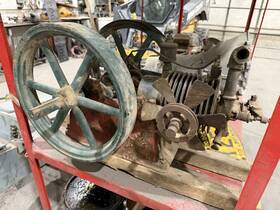
( Brand: International Harvester ), ( Manufacturer Part Number: 22599 ), ( Type: Horizontal ), ( Powered By: Gas )
Review INTERNATIONAL HARVESTER Horizontal Gas Stationary Engine Model
The **International Harvester 22599 Horizontal Gas Stationary Engine** is a robust and versatile powerhouse designed for reliability, efficiency, and long-term performance in a wide range of industrial, agricultural, and commercial applications. Built with International Harvester s legacy of engineering excellence, this horizontally opposed, four-cylinder engine delivers a balanced and smooth operation, making it ideal for driving generators, pumps, compressors, and other stationary machinery where steady power and low vibration are critical. With a displacement of approximately **1,100 cubic inches (18.0 liters)**, this engine produces a substantial amount of torque and horsepower, ensuring it can handle demanding workloads with ease while maintaining operational stability. Its **gasoline or natural gas fuel flexibility** allows for adaptability across different fuel sources, reducing operational costs and environmental impact when configured for cleaner-burning alternatives.
The 22599 engine features a **cast-iron block and head**, providing exceptional durability and resistance to wear over extended service life. Its horizontally opposed cylinder arrangement minimizes vibration and reduces maintenance requirements, making it particularly well-suited for continuous operation in applications such as backup power systems, water pumping, or industrial processing. The engine is equipped with a **mechanical fuel injection system**, ensuring precise fuel delivery for optimal combustion efficiency and reduced emissions, while its **dry sump lubrication** system enhances reliability by keeping oil separate from the crankcase, preventing sludge buildup and extending component life. A robust **air-cooled or liquid-cooled option** (depending on the model variant) allows for flexible installation in environments where cooling requirements vary, whether in enclosed spaces or outdoor settings.
Designed with ease of maintenance in mind, the 22599 features accessible components, including a **removable cylinder head** for straightforward servicing, and a **direct-drive or belt-driven configuration** to accommodate various load requirements. Its **compression ratio** is optimized for both performance and fuel economy, while the **governor system** ensures consistent speed regulation, making it reliable for applications where precision is essential. Whether used in remote agricultural settings, commercial power generation, or industrial automation, this engine exemplifies International Harvester s commitment to building rugged, dependable machinery that can withstand the rigors of heavy-duty use. With proper upkeep, the 22599 remains a trusted workhorse for decades, offering a blend of power, efficiency, and enduring reliability in stationary power applications.
### **Pros and Cons of Buying an International Harvester 22599 Horizontal Gas Stationary Engine**
#### **Pros:**1. **Reliability and Durability** The International Harvester (now part of Navistar) brand is known for producing robust industrial engines designed for heavy-duty applications. The 22599 model, built in the mid-20th century, was engineered for longevity, making it suitable for continuous operation in stationary power generation, pumping systems, or industrial machinery.
2. **Proven Performance** This engine was widely used in agricultural, industrial, and marine applications, indicating its ability to handle demanding workloads. Its horizontal configuration allows for efficient cooling and easy maintenance access, which can be advantageous in fixed installations.
3. **Fuel Flexibility** As a gas (likely natural gas or propane) engine, it offers a cleaner-burning alternative to diesel in some applications, reducing emissions and operational costs if fuel is readily available. Gas engines are also often more forgiving in terms of fuel quality compared to diesel.
4. **Availability of Parts and Service Support** Being a classic industrial engine, parts are still available through specialty suppliers, salvage yards, or Navistar s legacy parts network. While newer engines may have more extensive support, the 22599 s design is well-documented, making repairs manageable for experienced mechanics.
5. **Lower Initial Cost** Compared to modern engines, the 22599 is significantly cheaper to purchase, making it an attractive option for budget-conscious buyers or those repurposing it for secondary applications.
6. **Compatibility with Older Systems** If you re integrating it into an existing setup (e.g., an older generator, pump, or machinery), its design may align well with legacy equipment, reducing the need for costly modifications.
---
#### **Cons:**1. **Age and Wear** This engine is decades old, meaning it may have accumulated significant wear and tear. Without thorough inspection and restoration, it could require extensive repairs, reducing its lifespan and increasing downtime.
2. **Maintenance Requirements** Older engines often demand more frequent maintenance, including valve adjustments, piston ring replacements, and bearing checks. Modern engines incorporate advanced lubrication and cooling systems that reduce such issues.
3. **Emissions and Environmental Regulations** Gas engines from this era may not meet current emissions standards, particularly if used in enclosed or regulated environments. Retrofitting for compliance could be costly or impractical.
4. **Limited Fuel Efficiency** Compared to modern engines, the 22599 likely has lower fuel efficiency, leading to higher operational costs over time. Gas engines, while cleaner, may not be as economical as diesel or newer gas alternatives in terms of power output per unit of fuel.
5. **Dependence on Skilled Labor** Repairing or maintaining this engine may require specialized knowledge of vintage industrial engines. Finding qualified technicians familiar with its intricacies could be challenging, especially in regions where such expertise is rare.
6. **Potential for Hidden Issues** Without a professional inspection, hidden problems such as cracked cylinders, worn crankshafts, or failing turbochargers (if equipped) could render the engine unusable or require costly overhauls.
7. **Resale Value** Unlike newer engines, the 22599 has little to no resale value. If you plan to sell or trade it later, you may struggle to recoup any investment.
8. **Noise and Vibration** Older horizontal engines can be louder and more vibration-prone than modern counterparts, which may be a concern in residential or noise-sensitive areas.
---
### **Ending Conclusion**
The International Harvester 22599 horizontal gas stationary engine is a robust, well-built machine with a strong reputation for durability in industrial applications. Its advantages lie in its reliability, fuel flexibility, and lower purchase cost, making it a viable option for those seeking a secondary or legacy power source. However, its age introduces significant drawbacks, including higher maintenance demands, potential unreliability without restoration, and compatibility issues with modern standards. The engine is best suited for applications where cost is a primary concern, and you have the resources (time, expertise, or budget) to address its limitations.
### **Recommendation**
**Buy the 22599 only if:**- You have a specific, low-cost application in mind (e.g., a backup generator, agricultural use, or a hobbyist project).
- You are prepared to invest time and money in a full restoration or overhaul before use.
- You can source genuine parts and have access to experienced mechanics familiar with vintage engines.
- Emissions and noise regulations in your area are not restrictive, or you are willing to modify the engine to comply.
**Avoid purchasing it if:**- You need a reliable, low-maintenance engine for critical or commercial use without extensive preparation.
- You lack the technical skills or resources to diagnose and repair common issues in older engines.
- Modern alternatives (e.g., remanufactured diesel engines, electric generators, or newer gas engines) are within budget and offer better efficiency and support.
- You plan to use it in an environment where emissions or noise regulations could pose legal risks.
**Alternative Considerations:**If your goal is stationary power generation, evaluate remanufactured diesel engines (e.g., Cummins, John Deere) or modern natural gas engines (e.g., from Caterpillar or Waukesha) for better efficiency, warranty support, and compliance with current standards. For budget-friendly options, consider well-maintained used engines from reputable dealers with service histories.
Details:
Turns over freely but does not run. Looks to be missing some parts. Sat in a barn for many years.
part #: 22599 price
- $2000.00
specifications stationaryenginezo:
- brand: International Harvester
- mpn: 22599
- type: Horizontal
- powered by: Gas
returns stationaryenginezo:
- policy: No Returns
seller stationaryenginezo:
- # reviews: 707
- rating: 100.0%
- city: Hastings, Minnesota
general stationaryenginezo:
- condition: For parts or not working
- Light Equipment Tools > Stationary Engines > Engines
shipping stationaryenginezo:
payments stationaryenginezo:
- wallet: Paypal
- credit card: Visa
- other
offer stationaryenginezo:
- sold: 0
- quantity: 1
- started: April 8, 2026
- options: Seller-arranged-local-pickup
- best offers: True
- availability: In Stock
International Harvester 22599 Is Similar To:
- 1 1-2 Hp Mccormick Deering Vintage International Harvester Hit Miss Gas Engine (52.1% similar) Posted locally as well. Will remove ad if sold...(September 10th, 2018)
- 1479t International Harvester Old Ihc Mogul Hit Miss Gas Engine Magneto (60.4% similar) It is part number 1479T and measures about inches in diameter with a 1/2 inch face. The pictures tell story. It has a 3/8 inch hole for the magneto armature shaft and key way is in great shape. I can be reached at if you'd like to talk about it. Don't miss it. They have very little noticeable wear ...(June 29th, 2018)
- 153n 154n Ihc International Harvester Grease Cup (50% similar) ...(March 9th, 2017)
- 1831t International Harvester Old 1hp Ihc (47.7% similar) This fork has no cracks, breaks, or repairs of any kind and is ready to be put work on an engine. I can be reached at if you'd like to talk about it. Don't miss it. It is part number 1831T and has very little wear on the fingers. It has some minor pitting but this is strictly cosmetic and will not ...(January 18th, 2017)
- 21372-d Ihc Nos International Harvester (43% similar) You are buying on a nos tube of ICC point grease vintage grease brand new in the box buyer pays all shipping...(February 19th, 2018)
- Gas 2-2 1 Harvester Lb 3-5hp Governor 2 International La 3567-da Ihc Engine (36.4% similar) It is in very nice condition with its teeth still very square and not razor ed and no cracks or repairs. It has the part number of 3567 DA on it...(February 1st, 2015)
- 6212-db International Harvester Old Ihc (48.6% similar) It seems to be in good condition with no cracks, breaks, or repairs of any kind. If you've been looking for one to complete a restoration heres your chance. The kerosene carburetors are quite tough to find and a great way finish off an authentic restoration. It mounts with two holes inches apart on ...(March 28th, 2017)
- 71182 International Harvester Antique Old Hp Hit Miss Gas Engine With (56.9% similar) The cart is not as nice other one I have listed but does job. This is a throttle governed engine. Please look at the pics and ask any questions. Could need a few tweaks or minor maintenance, but overall in excellent condition with great compression. This is model 3T05 and the serial number lb 71182...(January 10th, 2019)
- 7410ta International Harvester Ihc Cast Iron Mogul Titan Steering Wheel (50.4% similar) Please do your homework to be sure it fits application. I can be reached at if you'd like to talk about it. It is part number 7410TA and about 18 inches in diameter. It is in excellent used condition with no cracks, breaks, or repairs of any kind. It has the steering shaft and nut still in as can be...(November 16th, 2018)
- 9244-d Ihc International Harvester Lb 1 (46.7% similar) Complete with everything seen in pics...(February 24th, 2017)
- 945t International Harvester Ihc Mogul Type Cast Iron Belt Pulley Hit (42.3% similar) It has a inch bore for the crankshaft and key. It is part number 945T and has a inch face 6 inches in diameter. I can be reached at if you'd like to talk about it. If you've been looking for one to complete a restoration heres your chance. Please measure your engine to be sure it works for ...(December 18th, 2018)