DETROIT LUBRICATOR CO 094656 Antique Hydrostatic Steam Oiler Co. Engine
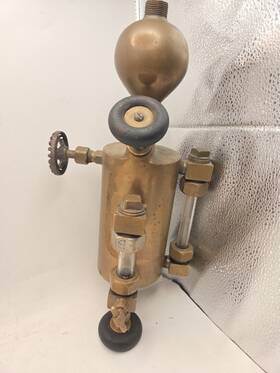
( Brand: Detroit Lubricator Co ), ( Manufacturer Part Number: 094656 ), ( Engine Type: Hit Miss ), ( Type: Oiler ), ( Material: Brass ), ( Country Of Origin: United States )
Review DETROIT LUBRICATOR CO Co. Antique Company Hydrostatic Steam Engine Oiler Quart
The **Detroit Lubricator 094656 Antique Hydrostatic Steam Engine Oiler** is a meticulously crafted, early 20th-century mechanical marvel designed to automate the lubrication of steam engines a critical innovation during the industrial revolution when manual oiling was labor-intensive and prone to inconsistency. This robust, cast-iron unit exemplifies the precision engineering of its era, featuring a compact yet durable construction with a cylindrical brass reservoir and a finely machined hydrostatic pump mechanism. The oiler operates on a simple yet ingenious principle: as the steam engine s moving parts turn, the attached lever or cam activates the hydrostatic system, forcing oil through precision-bored passages and onto the bearings at precisely timed intervals. This ensures consistent lubrication, reducing friction, preventing wear, and extending the lifespan of the engine an essential feature in factories, railroads, and marine applications where reliability was paramount.
The **094656 model** stands out for its distinctive design elements, including a sturdy base with mounting flanges for secure attachment to the engine s crankshaft or connecting rod, a transparent glass oil sight gauge for monitoring oil levels, and a brass-handled adjustment knob that allows operators to fine-tune the lubrication frequency. The brass fittings and valves, though slightly worn by time, reflect the high-quality materials used in its construction, ensuring both durability and resistance to corrosion. The unit s exterior bears the hallmarks of vintage craftsmanship, with machined details, stamped part numbers, and a weathered finish that tells the story of decades of service in demanding industrial environments.
Beyond its functional brilliance, this lubricator holds significant historical value as a relic of the mechanical age, embodying the ingenuity of engineers who sought to optimize efficiency through automation. Collectors and enthusiasts of antique machinery will appreciate its intricate design, while historians of industrial technology recognize it as a key component in the evolution of steam power. Whether displayed as a centerpiece in a workshop or restored for use in a vintage engine setup, the **Detroit Lubricator 094656** serves as both a testament to mechanical innovation and a tangible link to the past where human ingenuity met the relentless demands of industry.
The Detroit Lubricator Company Model 094656 is an antique hydrostatic steam engine oiler, a device historically used to automatically lubricate steam engines by injecting oil into the steam lines. Below is a detailed analysis of its pros and cons, followed by a conclusion and recommendation.
---
### **Pros of buying a Detroit Lubricator 094656**
1. **Historical and Collectible Value**
The unit is a well-preserved example of early 20th-century industrial engineering, particularly from the Detroit Lubricator Company, which was a prominent manufacturer of lubrication equipment. For collectors of vintage machinery, steam power, or industrial history, this piece could hold significant value, especially if it is in excellent condition or comes with documentation.
2. **Functional and Educational Potential**
If restored properly, the oiler could serve as a working demonstration piece for museums, educational institutions, or steam engine hobbyists. It provides insight into how early lubrication systems operated, which can be valuable for teaching mechanical principles or industrial heritage.
3. **Rarity and Niche Appeal**
Antique lubricators like this are not commonly found in the market, particularly in fully functional or well-preserved condition. This rarity can make it a unique acquisition for enthusiasts who specialize in steam power, antique machinery, or mechanical engineering.
4. **Potential for Restoration and Customization**
Restoring the unit could be a rewarding project for someone with mechanical skills. The process might involve cleaning, repairing worn parts, or even modifying it for modern use in a controlled setting (e.g., a small-scale steam engine setup). This could be both a hobbyist s passion project and a way to preserve a piece of history.
5. **Investment Potential**
If the market for vintage industrial equipment continues to grow, this item could appreciate in value over time, particularly if it is authenticated and well-documented. Some antique machinery has become highly sought after by investors or collectors.
---
### **Cons of buying a Detroit Lubricator 094656**
1. **High Maintenance and Restoration Costs**
Antique machinery often requires significant effort and expense to restore to working condition. The unit may have rust, worn seals, corroded metal, or missing parts. Professional restoration could be costly, and even then, there is no guarantee of long-term functionality. DIY restoration is time-consuming and may not yield satisfactory results without expertise.
2. **Lack of Modern Compatibility**
The oiler was designed for steam engines of a specific era, and its components (e.g., oil reservoirs, pressure regulators, and connections) may not be compatible with modern systems or easily replaceable. Finding original or compatible replacement parts could be difficult or impossible.
3. **Safety Risks**
Steam engines and their lubrication systems involve high pressure, heat, and moving parts. Operating an antique oiler especially if not properly restored poses safety risks, including leaks, explosions, or mechanical failures. This makes it unsuitable for casual or unskilled users.
4. **Limited Practical Use**
While the oiler has historical value, its practical application today is extremely limited. Modern steam engines (if any still exist) use updated lubrication systems, and the Detroit Lubricator 094656 is unlikely to be useful in contemporary industrial or residential settings. Its primary value lies in preservation, not function.
5. **Storage and Handling Challenges**
Antique machinery requires careful storage to prevent damage from moisture, dust, or physical stress. Transporting the unit especially if large or heavy may also be difficult and costly. Insurance and handling considerations add to the complexity of ownership.
6. **Market and Resale Uncertainty**
Even for collectors, the resale market for niche antique machinery can be unpredictable. While some items appreciate, others may depreciate due to changing interests or economic factors. There is no guarantee of a return on investment.
7. **Ethical and Environmental Considerations**
If the unit is not in pristine condition, restoring it may involve sourcing materials or parts that could have environmental or ethical implications (e.g., lead-based solder, outdated manufacturing processes). Additionally, if the unit is part of a larger system, removing it could affect the integrity of the original setup.
---
### **Conclusion**
The Detroit Lubricator 094656 is a fascinating piece of industrial history with potential appeal to collectors, educators, and hobbyists. Its primary strengths lie in its historical significance, collectible value, and the opportunity it presents for restoration as a passion project. However, these benefits come with substantial drawbacks, including high restoration costs, limited practical use, safety concerns, and the challenges of maintaining and storing an antique piece.
For the right buyer someone with deep interest in steam power, mechanical engineering, or industrial history, and the resources to restore and preserve it this oiler could be a worthwhile acquisition. For others, the costs and complexities may outweigh the benefits, making it a less ideal purchase.
---
### **Recommendation**
1. **If you are a collector or enthusiast:**Purchase the unit if you are prepared for the restoration process, have access to mechanical expertise, and are willing to invest time and money into bringing it back to working condition. Focus on acquiring it with full documentation (manufacturer details, serial number, and historical context) to maximize its value. Consider joining steam engine or antique machinery communities for guidance on restoration.
2. **If you are not experienced with restoration:**Avoid purchasing unless you are willing to pay a premium for a fully restored and tested unit from a reputable seller. Alternatively, consider visiting museums or exhibitions where such machinery is already preserved and displayed.
3. **If you seek practical use:**Do not buy this unit unless you have a specific, modern-compatible steam engine system that requires its functionality. In nearly all cases, modern alternatives will be more practical and safer.
4. **If you are investing for resale:**Research the current market for similar items to ensure there is demand. Consult with experts in antique machinery to assess its potential appreciation. Be cautious of overpaying for an item that may not hold long-term value.
Ultimately, the Detroit Lubricator 094656 is best suited for those who appreciate its historical and mechanical legacy and are committed to preserving it responsibly. For casual buyers or those without a clear plan for its use, the risks and costs may not justify the purchase.
Details:
Please see all pictures. Orders with authenticity tag must have to be considered for return. Message me with any questions. Ships fast and securely.
This unit is used and in good shape.
part #: 094656 prices
- $40.00-$350.00
specifications stationaryenginezo:
- brand: Detroit Lubricator Co
- mpn: 094656
- engine type: Hit Miss
- type: Oiler
- material: Brass
- country of origin: United States
offer stationaryenginezo:
- quantity: 1
- options: Ship-to-home
- best offers: True
- availability: In Stock
- started: April 7, 2026
- sold: 0
seller stationaryenginezo:
- city: Hotchkiss, Colorado
- # reviews: 2428
- rating: 99.7%
returns stationaryenginezo:
- policy: No Returns
payments stationaryenginezo:
- credit card: Discover
- other
- wallet: Paypal
general stationaryenginezo:
- Light Equipment Tools > Stationary Engines > Parts
- condition: Used
shipping stationaryenginezo:
- cost: $21.15
- class: Standard, Expedited
- service: USPS Ground Advantage, USPS Priority Mail
- carrier: USPS
- transit: 3-8 Days
- type: Calculated
Detroit Lubricator Co 094656 Is Similar To:
- 1669888 Detroit Lubricator Li Material (43.3% similar) Up for offer antique Detroit Lubricator Co. Steam engine Lubricator Detroit, USA 1/3 pint brass w 4 sight glasses number: overall measurements: 9 - tall all glass is good. No chips or cracks. 5 - wide this Lubricator is in great Condition as seen pictures...(June 21st, 2017)
- 1899 Antique Brass Hit And Miss Oil Injector Moon Pat Feb 5 Detroit Size 0 (34.6% similar) ...(November 19th, 2015)
- Steam Hit Drip Lubricator 33a-2 Brass Oiler Antique Detroit Engine Essex (49.4% similar) 5 tall, DOA, good usable Condition with no damage, model 33A spring loaded fill door still works as it should...(February 8th, 2015)
- 394885 Detroit Lubricator Pint Oil Injector Brass Steam Hit And Miss (44% similar) Detroit Lubricator 1/3 pint oil injector, brass, steam, hit and miss up for bid is a injector. It looks to have a good body but is missing parts. Both sight glasses are intact. I have only removed the grease and dirt so you can take it to level want. It is stamped 1/3 pint at the top of one sight ...(June 9th, 2019)
- 3a-63327 Detroit 3-71 Diesel Engine (34.2% similar) ...(September 14th, 2017)
- 5033-7101 Detroit Diesel Engine (33.6% similar) Serial no: 3d Condition: as is. Amid, Detroit diesel 3-53 engine. Engine turns over, has not been run. S50 injectors. No exhaust manifold. 3d sae 2 bell housing and Delco drive flywheel. Mfg: Detroit diesel mfg...(April 12th, 2018)
- Rod 5178290 Corporation Push Poppet Valve Diesel Detroit Engine (20.4% similar) Military issue surplus Detroit diesel Corporation engine poppet valve push rod P/N n this part cross references to the following. But also the Cost of packaging materials, our time and most importantly, our time hand delivering each package to the us post office inches maximum first end. 093 inches ...(January 21st, 2015)
- 485-1a American Lubricator Detroit Michigan Lub Brass Glass Drip Oiler Hit Miss Stationary Steam Engine (38.9% similar) Brass glass drip oiler hit miss stationary steam engine 485 1A, made in Detroit by American injector Co. The body measures tall and diameter. American lub...(May 3rd, 2016)
- 21477 Detroit Lubricator Oiler 601 Vintage Inv (40.6% similar) No Canadians...(June 21st, 2016)
- 330-15 Detroit Antique Lubricator Oiler Hit Miss Engine 304 (46.8% similar) Hit and miss engine oiler. Glass and brass. Has been stored for years. Detroit Lubricator Co. Glass across...(September 17th, 2016)
- Un-known Detroit Engine Works Vertical Hit Miss Antique Gas (35.5% similar) This belonged to my dad, who passed away four years ago and now it is time for it to got to a new home. The crank does have some pitting, and the outer cylinder jug has a partially repaired crack. If you are a serious buyer and would like more pictures or have specific questions you would like ...(July 30th, 2016)