IHC 1489T Antique Mogul Fuel Bowl Carburetor Incomplete Hit
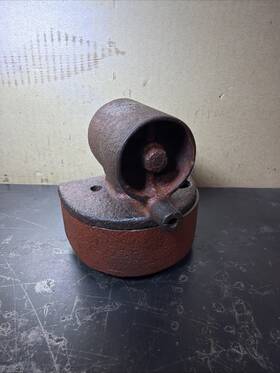
( Brand: Ihc ), ( Manufacturer Part Number: 1489T ), ( Engine Type: Hit Miss ), ( Type: Carburetor )
Review IHC Antique Mogul Fuel Bowl Carburetor Parts Incomplete Hit Miss
The **IHC 1489T Antique Mogul Fuel Bowl Carburetor (Incomplete, Hit)** is a rare and historically significant piece of vintage agricultural machinery, originally designed for International Harvester Company (IHC) tractors and engines from the mid-20th century. This particular carburetor, likely from the **Mogul series**, features a classic **fuel bowl assembly** a critical component in carburetion systems that regulates fuel flow while maintaining proper air-fuel mixture balance. The **1489T designation** suggests it was part of a specific model line, possibly used in early diesel or gasoline-powered IHC tractors, such as the **IHC Model 60, 70, or 80 series**, which were pivotal in shaping modern farming equipment. Though this carburetor is **incomplete**, it retains key elements like the **fuel bowl, throttle linkage, and possibly the main body**, making it a valuable piece for collectors, restorers, or enthusiasts seeking to preserve or repair vintage machinery. The **antique Mogul design** reflects the engineering of an era when durability and simplicity were paramount, with cast iron construction and mechanical precision that set the standard for early agricultural engines. Whether used for restoration projects, educational displays, or as a centerpiece in a mechanical museum, this carburetor embodies the craftsmanship of a bygone industrial age, offering both functional and historical value to those who appreciate mechanical heritage.
### Pros and Cons of Buying an IHC 1489T Antique Mogul Fuel Bowl Carburetor (Incomplete, Hit)
#### **Pros:**1. **Historical and Collectible Value** The IHC 1489T is an antique carburetor from the early to mid-20th century, making it a piece of mechanical history. If you have an interest in vintage machinery, restoration, or automotive history, owning one could be rewarding.
2. **Potential for Restoration** If you have mechanical skills or access to someone who does, this carburetor could be restored to working condition. A fully functional antique carburetor can be a unique addition to a classic engine or a display piece.
3. **Parts for Rare Engines** Some antique tractors, industrial engines, or early automobiles used similar carburetor designs. If you re working on a rare or hard-to-find engine, this incomplete unit might provide parts that are otherwise difficult to source.
4. **Learning Opportunity** Working on an antique carburetor can teach you about older mechanical designs, fuel delivery systems, and manual machining techniques. This can be valuable for hobbyists or those interested in mechanical engineering.
5. **Potential for Customization** If you re experienced with carburetion, you might be able to adapt or modify this carburetor for a specific application, such as a custom engine build or a unique fuel system experiment.
6. **Low Cost (If Incomplete)** Since the unit is incomplete, the price is likely much lower than a fully functional or restored version. This makes it accessible for collectors or hobbyists on a budget.
---
#### **Cons:**1. **Incomplete Condition** The carburetor is described as incomplete, meaning it may lack critical components such as the float bowl, jets, throttle linkage, or internal parts. Without these, it cannot function and may require significant effort to restore.
2. **Lack of Functionality** Even if restored, antique carburetors like this often lack modern performance standards. They may be prone to leaks, inconsistent fuel delivery, or difficulty tuning compared to modern carburetors.
3. **Maintenance Challenges** Older carburetors often require frequent cleaning, adjustment, and part replacement due to wear, corrosion, or deterioration of materials (e.g., rubber seals, brass components). This can be time-consuming and costly.
4. **Limited Availability of Parts** Finding replacement parts for an antique carburetor can be difficult. Original parts may no longer be manufactured, and sourcing compatible alternatives may require extensive research or custom machining.
5. **Corrosion and Wear** If the carburetor has been stored for decades, it may suffer from rust, pitting, or internal wear. Restoring it to a functional state could require extensive cleaning, machining, or even rebuilding from scratch.
6. **No Guarantee of Success** Restoring an incomplete antique carburetor is not a guaranteed project. Without proper knowledge, tools, or patience, the effort may not yield a working result, leaving you with a partially restored or non-functional piece.
7. **Time-Consuming Process** Restoration work can take a significant amount of time, especially if you re doing it as a hobbyist. This may not be ideal if you need a carburetor for an immediate project.
8. **Potential for Overpaying** While the low price is a pro, it s important to ensure you re not paying too much for a piece that may require more work than it s worth. Researching similar units and their restoration costs is advisable.
---
### **Conclusion:**Buying an incomplete IHC 1489T antique carburetor can be a fascinating and rewarding project for someone with a passion for vintage machinery, mechanical restoration, or historical preservation. The potential for learning, customization, and owning a piece of history is significant. However, the challenges of restoring an incomplete and potentially corroded unit should not be underestimated. This purchase is best suited for those with mechanical skills, patience, and access to tools or resources for restoration. If you re not prepared for the time and effort required, it may be more practical to seek a fully functional or restored carburetor for practical use.
---
### **Recommendation:**- **If you re a hobbyist or restorer with experience in mechanical work**, this carburetor could be a worthwhile project. Take the time to assess its condition thoroughly, research restoration techniques, and consider whether you have the skills or resources to complete the job.
- **If you need a carburetor for an immediate project or lack mechanical experience**, it may be better to invest in a fully functional or restored unit from a reputable seller. Alternatively, consider a modern carburetor that is compatible with your engine s needs.
- **If you re interested in the historical aspect but not restoration**, you could purchase the carburetor as a display piece or for educational purposes, acknowledging that it will remain incomplete.
- **Before buying**, inspect the unit closely (if possible) or request detailed photos/videos of its condition. Ask the seller about any known issues, missing parts, or restoration history to make an informed decision.
Details:
Heavy pitting. See pictures and research please. The 2 mounting plates are 1 7/8 apart on centers. Choke plate is stuck.
See pictures for the absolute best. What you see is what I have.
part #: 1489t prices
- $149.99-$249.99
specifications stationaryenginezo:
- brand: Ihc
- mpn: 1489t
- engine type: Hit Miss
- type: Carburetor
payments stationaryenginezo:
- other
- credit card: Visa
- wallet: Google-pay
offer stationaryenginezo:
- started: March 3, 2026
- best offers: True
- availability: In Stock
- options: Ship-to-home
- quantity: 1
- sold: 0
shipping stationaryenginezo:
- service: USPS Ground Advantage
- class: Standard
- carrier: USPS
- transit: 3-9 Days
- cost: $10.50
- type: Fixed
general stationaryenginezo:
- Light Equipment Tools > Stationary Engines > Parts
- condition: For parts or not working
seller stationaryenginezo:
- rating: 99.8%
- city: Lockridge, Iowa
- # reviews: 2876
returns stationaryenginezo:
- policy: No Returns
Ihc 1489T Is Similar To:
- Kw Farm Engine Ihc Magneto Tractor Nice Hit 10-20 Titan (30.4% similar) It is missing the cover that goes over the magnets. Take a look at the pictures and decide for yourself, they don't get much nicer than this. No reserve so bid to win. I tested it for spark and didn't get any, I'm sure all it probably needs is a good points filing, I never even took the points cover...(January 18th, 2015)
- 10386 Zenith Old Ihc Farmall Super Tractor Carburetor Wow (36.2% similar) There are no cracks, breaks, or repairs that I can see know of other than a small area weld where the fuel line goes into it. There is very little wear on the choke shaft but some throttle. It mounts with two holes inches apart on center. I can always be reached at if you'd like to talk about it. ...(January 7th, 2019)
- Ihc Pulley 12x14 Hit Cast Iron Belt Famous Titan Original Engine (22.4% similar) I will combine shipping when possible...(January 12th, 2015)
- 1479t International Harvester Old Ihc Mogul Hit Miss Gas Engine Magneto (32.6% similar) It is part number 1479T and measures about inches in diameter with a 1/2 inch face. The pictures tell story. It has a 3/8 inch hole for the magneto armature shaft and key way is in great shape. I can be reached at if you'd like to talk about it. Don't miss it. They have very little noticeable wear ...(June 29th, 2018)
- 1520 T International Ihc Mogul (18% similar) ...(April 4th, 2017)
- Magneto 1622h 10hp Mogul High Gas Engine Hit Ihc Tension Bosch (34.8% similar) So if someone doesn't pay I will ban them from my listings and also tell all my friends who also sell engine parts on here who to watch out for for example if my measurements are wrong I would take it back. Its in great shape. Please bid and buy for lots of money, I Will use all funds I receive for ...(February 14th, 2015)
- 1708-d Ihc Original Mccormick Deering Tractor Brass Water Injection Carburetor (31.1% similar) Let the pictures be your guide. It mounts with two holes inches apart on center. It seems to be in excellent condition with no cracks, breaks, or repairs of any kind. I can always be reached at 193ONE if you'd like to talk about it. These original water carburetors are quite tough to find in the ...(February 28th, 2018)
- Gear Engine Hit Ihc Nice Hp Mogul Magneto 1879t Original Gas 1 Drive (31.9% similar) It is in very nice condition with its teeth still very square and not razor ed and no cracks or repairs. It has a part number of 1879T on it, and measures approx. This offer is for a nice original 1 hp Ihc mogul gas engine magneto drive gear...(January 12th, 2015)
- Mogul Tractor Ihc Engine Gas 2176t Tag (31.5% similar) Casting is made of brass, I will let new owner polish if so desired...(March 8th, 2015)
- 2278a Ihc Vtg Flat Belt Pulley Mccormick Corn Sheller Hit Miss (40.9% similar) I think it may have been used in other applications as well. Offered is a cast-iron flat belt pulley marked Ihc and 2278A. Measures about inches across with a 3-INCH driving face. Glad to combine ship if possible. I do my best to keep shipping as low and safe possible. Using online resources I found...(April 30th, 2018)
- 7410ta International Harvester Ihc Cast Iron Mogul Titan Steering Wheel (25.5% similar) Please do your homework to be sure it fits application. I can be reached at if you'd like to talk about it. It is part number 7410TA and about 18 inches in diameter. It is in excellent used condition with no cracks, breaks, or repairs of any kind. It has the steering shaft and nut still in as can be...(November 16th, 2018)