FAIRBANKS MORSE YF98C Stationary Engine YF105C YF101A YF142A
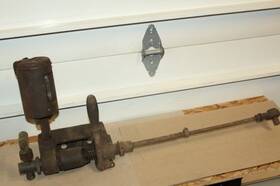
( Brand: Fairbanks Morse ), ( Manufacturer Part Number: YF98C ), ( Part Type: Engine ), ( Engine Type: Hit Miss ), ( Material: Cast )
Review FAIRBANKS MORSE Stationary Engine Assembly
The Fairbanks Morse YF series of stationary engines represents a legendary legacy of American industrial engineering, blending robust mechanical design with the reliability that defined mid-20th-century power generation. Among the most iconic models are the **YF98C**, **YF105C**, **YF101A**, and **YF142A**, each a masterpiece of reciprocating engine technology tailored for stationary applications such as pumping water, driving generators, or powering industrial machinery. These engines are built upon the time-tested principles of the legendary Fairbanks Morse opposed-piston design, where two pistons move in unison within a single cylinder, eliminating the need for a crankshaft and reducing wear while maximizing efficiency. The **YF98C**, with its compact yet powerful frame, is a versatile workhorse often found in agricultural, mining, or remote utility settings, delivering around 98 horsepower at a modest 600 RPM, making it ideal for applications where space and fuel economy are priorities. Its cast-iron construction, reinforced by precision-machined components, ensures durability even under demanding conditions, while the engine s air-cooled or water-cooled options cater to diverse operational environments.
The **YF105C**, a slightly larger sibling, scales up to approximately 105 horsepower, offering enhanced performance for heavier loads without sacrificing the simplicity of maintenance that Fairbanks Morse engines are renowned for. Like its counterparts, it features a robust, cast-iron block with a two-stroke cycle that eliminates the need for valves, reducing complexity and extending service intervals. The **YF101A**, a slightly earlier model in the series, retains the same fundamental design philosophy but may incorporate subtle refinements in fuel injection or ignition systems, depending on the year of manufacture, ensuring smoother operation and better fuel utilization. Its compact footprint and high torque output make it particularly well-suited for applications like water pumping or small-scale power generation where reliability is non-negotiable.
The **YF142A**, the largest of the four, stands out as a true powerhouse, producing around 142 horsepower and designed for more demanding industrial tasks such as driving large compressors, generators, or continuous-process machinery. This model often incorporates a slightly more sophisticated fuel system, possibly featuring a mechanical or electronic fuel pump for precise metering, and may include features like a governor for consistent speed regulation. Like the others, it retains the signature opposed-piston architecture, which not only reduces friction but also minimizes the need for frequent overhauls, a hallmark of Fairbanks Morse s engineering. All four engines share a commonality in their use of diesel fuel, which, combined with their efficient combustion chambers, ensures low operating costs and minimal emissions for their era.
Beyond their mechanical prowess, these engines are celebrated for their ease of maintenance, a trait that stems from their straightforward design. The absence of valves, camshafts, and complex valvetrains means fewer components to wear out or fail, while the opposed-piston layout distributes stress evenly across the cylinder walls. Fairbanks Morse engines were often equipped with durable components such as replaceable cylinder liners, robust connecting rods, and high-quality bearings, all of which contribute to their reputation for longevity. Additionally, their modular design allows for relatively straightforward repairs, with many parts interchangeable across different YF models, making them a favorite among collectors, restorers, and off-grid enthusiasts who value both performance and practicality.
Historically, these engines played a pivotal role in powering rural America, remote military outposts, and industrial sites long before the widespread adoption of electric grids. Their ruggedness and adaptability made them indispensable in environments where reliability was critical, and their legacy endures in modern applications such as vintage vehicle restoration, emergency backup power systems, and even experimental renewable energy setups. Whether used for their original purpose or repurposed for modern challenges, the Fairbanks Morse YF98C, YF105C, YF101A, and YF142A remain symbols of American ingenuity a testament to the enduring appeal of well-engineered, no-nonsense power.
### **Pros and Cons of Buying Fairbanks Morse YF-Series Stationary Engines (YF98C, YF105C, YF101A, YF142A)**
Fairbanks Morse (F-M) YF-series engines are robust, diesel-powered stationary power plants known for their reliability, durability, and historical significance in industrial and backup power applications. Below is a detailed analysis of their advantages and drawbacks, followed by a concluding recommendation.
---
### **Pros**
1. **Proven Reliability and Durability**
- These engines were designed for continuous operation, often running for decades with proper maintenance. Many units remain in service today, particularly in remote or backup power applications.
- The YF-series engines are known for their mechanical simplicity compared to modern turbocharged or electronically controlled engines, reducing the risk of complex failures.
2. **High Power Output for Their Size**
- The YF-series engines (e.g., YF98C at 100 HP, YF105C at 150 HP, YF101A at 125 HP, YF142A at 200 HP) deliver substantial power relative to their physical dimensions, making them suitable for medium to large industrial or backup power needs.
- They are often paired with generators to provide reliable electricity for factories, farms, or emergency backup systems.
3. **Low Operating Costs (Compared to Modern Engines)**
- Fuel efficiency, while not as high as modern engines, is adequate for stationary use, especially when running on diesel or other industrial fuels.
- Maintenance costs are relatively low due to their straightforward design, though parts may be harder to source over time.
4. **Historical and Nostalgic Value**
- For collectors or enthusiasts, these engines hold historical significance, particularly the YF-series, which were widely used in the mid-20th century for industrial and military applications.
- Some owners appreciate the "old-school" charm and the satisfaction of maintaining a well-built, vintage machine.
5. **Versatility in Applications**
- These engines can be adapted for various uses, including:- Backup power generation (e.g., for homes, farms, or small businesses).
- Mechanical power (e.g., driving pumps, compressors, or machinery in workshops).
- Marine or mobile applications (though this is less common for the stationary models).
- They can often be retrofitted with modern controls or alternators to improve functionality.
6. **Resale Value and Community Support**
- The YF-series engines have a dedicated following among diesel enthusiasts, vintage power collectors, and industrial operators. This can make them easier to sell or trade in the secondary market.
- Online communities (e.g., forums, Facebook groups) provide support for troubleshooting, parts sourcing, and restoration tips.
7. **Minimal Electronic Complexity**
- Unlike modern engines with complex fuel injection systems, turbochargers, and electronic controls, YF-series engines rely on mechanical components, reducing the risk of electronic failures.
- This simplicity can be an advantage for operators who prefer hands-on, mechanical systems.
---
### **Cons**
1. **Age and Wear**
- These engines are often **30 60 years old**, meaning they may require significant maintenance or restoration work to bring them back to optimal condition.
- Common issues include worn bearings, piston rings, valve problems, and fuel system leaks. Rebuilding or restoring one can be time-consuming and costly.
2. **Parts Availability and Sourcing Challenges**
- While some parts are still available through specialty suppliers (e.g., **Fairbanks Morse Parts, eBay, or vintage engine dealers**), others may be obsolete or difficult to find.
- Rebuilding kits or complete overhauls may require sourcing parts from multiple suppliers or even machining custom components.
- Some modern suppliers may no longer carry OEM parts, forcing buyers to rely on aftermarket or rebuilt components.
3. **Emissions and Environmental Regulations**
- Modern engines must comply with strict emissions standards (e.g., EPA, EU regulations). Older YF-series engines were not designed with these in mind and may fail to meet current environmental requirements if used for commercial or public applications.
- Retrofitting emissions control systems (e.g., catalytic converters, particulate filters) can be expensive and may not be feasible for all models.
4. **Fuel Efficiency and Modern Alternatives**
- Compared to modern diesel engines, the YF-series engines are **less fuel-efficient**, especially if not properly tuned or maintained.
- Newer engines offer better power-to-weight ratios, lower emissions, and improved reliability, making them more attractive for new installations.
5. **High Initial Cost for Restoration**
- Buying a used YF-series engine in poor condition can be cheap, but restoring it to working order may cost **$5,000 $20,000 **, depending on the extent of repairs needed.
- Labor costs for rebuilding or installing these engines can be high, especially if specialized mechanics are required.
6. **Limited Warranty or Support**
- Most YF-series engines are **not covered by modern warranties**, and original manufacturer support is no longer available.
- Buyers must rely on their own skills or third-party mechanics for repairs.
7. **Space and Weight Considerations**
- These engines are **heavy and bulky**, requiring significant space for installation. They are not ideal for compact or mobile applications.
- Foundation and mounting requirements may need reinforcement to handle the weight and vibration.
8. **Training and Skill Requirements**
- Operating and maintaining a YF-series engine requires **mechanical knowledge**, particularly in areas like:- Timing adjustments (camshaft, valves).
- Fuel system tuning (carburetors or early injection systems).
- Cooling and lubrication system maintenance.
- Novice operators may struggle without guidance from experienced diesel mechanics.
9. **Noise and Vibration**
- These engines are **loud and vibratory**, which can be a drawback for residential or noise-sensitive applications.
- Soundproofing or vibration isolation may be necessary for indoor or urban installations.
10. **Limited Lifespan Extension**
- While well-maintained YF engines can last decades, their **maximum operational lifespan is finite**. Eventually, major components (e.g., crankshaft, cylinder block) will wear out and require replacement or replacement of the entire engine.
- Unlike modern engines, which can often be rebuilt multiple times, some YF-series engines may reach a point where rebuilding is no longer cost-effective.
---
### **Conclusion**
Fairbanks Morse YF-series engines (YF98C, YF105C, YF101A, YF142A) are **excellent choices for enthusiasts, collectors, or operators who prioritize reliability, mechanical simplicity, and historical value**. They excel in **backup power, industrial applications, or as a learning tool for diesel mechanics**. However, they are **not ideal for modern commercial or high-efficiency applications** due to emissions concerns, parts availability issues, and higher maintenance demands.
For **new installations or primary power sources**, modern diesel or natural gas engines (e.g., Cummins, John Deere, or Perkins) offer better fuel efficiency, emissions compliance, and support. However, for **restoration projects, hobby use, or off-grid backup power**, a well-maintained YF-series engine can be a **rewarding and durable investment** provided the buyer is prepared for the challenges of ownership.
---
### **Recommendation**
1. **Buy a YF-Series Engine If:**- You are an **enthusiast or collector** interested in vintage diesel technology.
- You need a **reliable backup power source** in a remote or low-maintenance setting (e.g., farm, cabin, or off-grid home).
- You have **mechanical skills** or access to experienced help for maintenance and repairs.
- You are willing to **invest time and money** in restoration or rebuilding.
- Emissions regulations **do not apply** to your intended use (e.g., private property, non-commercial applications).
2. **Avoid a YF-Series Engine If:**- You need a **modern, low-emission, high-efficiency power source** for commercial or regulated use.
- You lack **mechanical experience** or access to skilled labor for repairs.
- You are on a **tight budget**, as restoration costs can be prohibitive.
- You require **compact or mobile power solutions** (these engines are heavy and stationary).
- You plan to use it for **continuous heavy-duty operation** without proper maintenance.
3. **Alternative Options to Consider:**- **Modern Diesel Generators:** Brands like **Cummins, John Deere, or Generac** offer reliable, emissions-compliant, and low-maintenance alternatives.
- **Natural Gas Engines:** More efficient and cleaner than diesel, ideal for areas with gas access.
- **Used Modern Engines:** Look for **rebuilt or lightly used** diesel engines (e.g., Detroit Diesel, CAT) if you need a balance of reliability and modern features.
- **Hybrid/Solar Systems:** For off-grid applications, combining a YF engine with solar or wind power can extend its usefulness.
4. **If You Proceed with a YF-Series Engine:**- **Inspect thoroughly** before purchasing look for signs of wear, leaks, or previous damage.
- **Budget for restoration** (expect $3,000 $15,000 depending on condition).
- **Join diesel engine
Details:
I combine items to save on shipping costs whenever size and weight allow. Fairbanks Morse Y Stationary Engine YF105C YF101A YF142A YF98C Assembly. Good working condition.
part #: yf98c price
- $425.00
specifications stationaryenginezo:
- brand: Fairbanks Morse
- mpn: Yf98c
- part type: Engine
- engine type: Hit Miss
- material: Cast
payments stationaryenginezo:
- money order
- cash
- other
- check
- credit card: Mastercard
- wallet: Google-pay
general stationaryenginezo:
- Light Equipment Tools > Stationary Engines > Parts
- condition: Used
offer stationaryenginezo:
- quantity: 1
- best offers: True
- started: May 13, 2026
- options: Ship-to-home
- sold: 0
- availability: In Stock
returns stationaryenginezo:
- policy: No Returns
shipping stationaryenginezo:
- type: Calculated
- class: Standard
- cost: $66.90
- service: USPS Ground Advantage
- carrier: USPS
- transit: 3-8 Days
seller stationaryenginezo:
- rating: 99.8%
- city: Evart, Michigan
- # reviews: 12771
Fairbanks Morse YF98C Is Similar To:
- 087728 Fairbanks Morse Oil Seal (41.2% similar) For sale is an oil seal...(June 21st, 2017)
- 10-25 Morse Hp Dealers Fairbanks Type Engines 1923 Catalog Oil (30.1% similar) Also visit skiff farm an associate who is also selling several hundred catalogues and ephemera...(February 12th, 2015)
- 10067-15 Fairbanks Morse Wearing Ring (38.9% similar) Thanks GREENIE9...(February 13th, 2018)
- 10555110 Fairbanks Morse Engine Retainer Ring (41.4% similar) 18B34 part numbers 796FAIRBANKS Morse engine...(June 8th, 2018)
- Morse Fairbanks Catalog Engines 10h. 1922 25 92g Oil Repro (42.1% similar) 5 x for your consideration is this reproduction Fairbanks Morse 'y' oil engines catalog measures pages...(February 22nd, 2015)
- 11i5l Fairbanks Morse For Go Kart Motor (36.4% similar) This is a Fairbanks Morse start recoil unit that came off of power products ah 47 powered chain saw. I do combine shipping on multiple sales too. It is in great serviceable condition. This re-coil will fit other engine applications also...(January 28th, 2019)
- 13215e1716 Fairbanks Morse Ignition Magneto Made In Usa (42.9% similar) Just on the link to e-mail us. 137 inches nominal mounting slot width 0. 734 inches minimum and. 194 inches maximum performance type high tension rotation element type permanent magnet rotor pole QUANTITY2CONTACT set QUANTITY1DRIVE connection type impulse coupled drive shaft takeaway shaft shaft ...(April 26th, 2018)
- 14013048-1 Fairbanks Morse Rare Used (41.1% similar) ...(November 4th, 2017)
- 16101753 Fairbanks Morse Helical Gear (35.2% similar) Immediate service available: m-f 9AM to 5PM est...(March 28th, 2019)
- Fairbanks 1 Vintage Fm Magneto Type Morse Hit Cylinder 1antique (37.3% similar) No damage or issues. Everything looks nice under the cap. 50 shipping. Winner pays this bid is for a antique vintage 1 cylinder Fairbanks Morse type FM, model j magneto. I have another listed and will combine shipping. Was told it worked fine, but I have no way to test it. Strong snap to the ...(January 24th, 2015)
- 2 Zaa728a Fairbanks-morse 1 1-2 (35.3% similar) The opening measures inches diameter. Up for sale is a gas engine crank hp Fairbanks Morse model there is P/N 2 ZAA728A embossed on it...(June 8th, 2017)