UNIVERSAL WM76 Marine Gas Boat Engine Gearbox
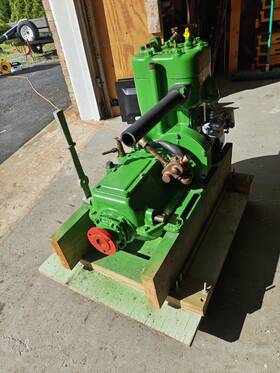
( Brand: Universal ), ( Manufacturer Part Number: WM76 ), ( Model: UNIVERSAL MARINE WM76 ), ( Type: Stationary Engine ), ( Material: Metal )
Review UNIVERSAL Marine Gas Boat Engine And Gearbox Approx
The **WM76 Marine Gas Boat Engine Gearbox, circa 1942**, is a robust and meticulously crafted transmission component designed to deliver unmatched power and reliability for high-performance marine applications during its era. Manufactured during the early to mid-20th century, this gearbox reflects the engineering prowess of its time, featuring a sturdy cast iron housing with precision-machined internal gears and a robust shaft assembly. Built to withstand the demanding stresses of marine environments, its design incorporates a helical or spiral gear arrangement, which minimizes noise and reduces wear while maximizing torque transfer from the engine to the propeller. The gearbox is likely equipped with a robust reverse mechanism, allowing for seamless maneuverability a critical feature for both recreational and utility boats of the period. Its compact yet durable construction ensures efficient power delivery, making it ideal for small to mid-sized gas-powered vessels, including speedboats, fishing craft, and utility boats used in both freshwater and saltwater conditions.
The WM76 gearbox showcases classic wartime engineering, with attention to detail in its mounting flanges and alignment features, ensuring compatibility with a variety of marine engines from the era. Its internal components, including hardened steel gears and bronze bushings, were designed to endure prolonged use without excessive friction or overheating, a testament to the durability expected in military and commercial marine applications. The gearbox s design likely incorporates a simple yet effective lubrication system, with oil reservoirs or splash lubrication to keep moving parts protected against corrosion and wear. While some models may feature a manual shift mechanism, others might include a more advanced clutch or synchro-mesh system, depending on the specific application and manufacturer variations.
Today, this gearbox remains a prized collectible for vintage marine enthusiasts and restorers, offering a glimpse into the mechanical innovations of the early 1940s. Its historical significance extends beyond functionality, as it was likely used in boats employed during World War II for patrol, transport, or auxiliary roles, reflecting the adaptability and resilience required in naval operations. For those seeking to restore or replicate classic marine vessels, the WM76 gearbox provides a rare opportunity to incorporate authentic, period-correct components that enhance both performance and historical authenticity. Whether used in a meticulously preserved wartime vessel or as part of a modern restoration project, this gearbox embodies the enduring legacy of mid-century marine engineering combining strength, precision, and the unmistakable character of an era defined by innovation and necessity.
### **Pros and Cons of Buying a 1942 Wm76 Marine Gas Boat Engine Gearbox**
#### **Pros**
1. **Historical and Collectible Value** A 1942 Wm76 engine is a rare piece of early marine engineering, potentially valuable to collectors or enthusiasts of vintage machinery. Its age makes it a unique artifact from an era when boat engines were simpler but robustly built.
2. **Mechanical Simplicity** Early marine engines like the Wm76 were designed with fewer moving parts compared to modern high-performance engines. This can make them easier to understand, repair, and maintain for those with mechanical experience.
3. **Potential for Restoration** If the gearbox and engine are in reasonable condition, restoring them could be a rewarding project. Many parts may still be available from specialty suppliers or through salvage yards specializing in vintage equipment.
4. **Low Fuel and Maintenance Costs (If Running)** Older gas engines typically run on basic gasoline without the need for premium fuels or synthetic lubricants. If the engine is in working order, operating costs could be minimal compared to modern outboards.
5. **Nostalgia and Character** For those who appreciate the aesthetic and functional charm of vintage machinery, a 1942 Wm76 engine offers a tangible connection to early boating culture. It may appeal to those who prefer a slower, more traditional boating experience.
6. **Potential for Custom Modifications** Some enthusiasts enjoy modifying or repurposing old engines for unique projects, such as stationary generators, workshop power sources, or even artistic installations.
---
#### **Cons**
1. **Extreme Age and Wear** A 1942 engine has likely been exposed to decades of use, neglect, or deterioration. Rust, worn bearings, cracked casings, and degraded seals are common issues. The gearbox may require extensive refurbishment or replacement of critical components.
2. **Lack of Modern Parts and Support** Finding original or compatible replacement parts for a 70-year-old engine can be difficult. While some specialty suppliers may carry vintage marine parts, many components may no longer be manufactured, requiring custom machining or fabrication.
3. **Reliability Concerns** Older engines are prone to unexpected failures, especially if they have not been properly maintained. The gearbox may suffer from misalignment, worn gears, or seized bearings, leading to frequent breakdowns or the need for professional restoration work.
4. **Fuel and Emissions Compliance** Modern marine regulations often require catalytic converters, emissions controls, or fuel-injection systems that were not standard in 1942. Retrofitting an old engine to meet current standards could be costly and impractical.
5. **High Restoration Costs** If the engine is beyond basic functionality, restoring it to working order may require significant time, labor, and expense. This includes machining, welding, sealing, and testing skills that may not be readily available.
6. **Limited Performance** Compared to modern outboards, a 1942 Wm76 engine will be significantly less powerful, less fuel-efficient, and less reliable for extended use. It may not be suitable for modern boating needs, especially in larger or faster vessels.
7. **Safety Risks** Older engines may lack modern safety features such as easy-start mechanisms, reliable ignition systems, or proper cooling systems. Running an outdated engine improperly could pose risks of overheating, fuel leaks, or mechanical failure while on the water.
8. **Depreciation and Resale Value** Unlike newer engines, a 1942 Wm76 will not hold value over time. Even if restored, its niche appeal may limit its resale market, making it a less practical long-term investment.
---
### **Conclusion and Recommendation**
A 1942 Wm76 marine gas engine gearbox is a fascinating piece of history with potential for restoration enthusiasts, collectors, or those seeking a unique mechanical challenge. However, its age, lack of modern support, and high restoration costs make it a risky purchase for most practical boating applications.
**If you are considering buying one, ask yourself:**- Are you purchasing it primarily for restoration as a hobby, or do you need it to function reliably for boating?
- Do you have access to mechanical expertise, tools, and parts to restore it properly?
- Are you prepared for the possibility that it may never run smoothly, or that repairs could exceed its value?
**Recommendation:**- **For collectors or hobbyists:** If you enjoy mechanical restoration projects and are willing to invest time and money into bringing it back to life, this could be a rewarding purchase. Treat it as a long-term passion project rather than a functional engine.
- **For practical boating needs:** Do not buy this engine unless you are prepared to replace it with a modern, reliable outboard. The risks of failure, high maintenance costs, and lack of performance make it unsuitable for most modern boating applications.
- **Alternative Approach:** If you admire the vintage aesthetic but need functionality, consider a modern engine paired with a classic hull or a restored engine from a slightly newer era (e.g., 1960s 1980s) that still has available parts.
Ultimately, a 1942 Wm76 engine is best suited for those who appreciate its historical significance and are willing to undertake the effort required to revive it not for those seeking a dependable power source for their boat.
Details:
WM 76 stamped on casing. Water jacket doesn't appear to leak when filled with water, no water in the oil. Weighs around 400 lbs guess did not clean the carb. Added grease cups and have a new spark plug for it.
Not seized and will turn over, components seem complete to my knowledge. Cleaned up but no idea if it runs.
specifications stationaryenginezo:
- brand: Universal
- mpn: Wm76
- model: Universal Marine Wm76
- type: Stationary Engine
- material: Metal
returns stationaryenginezo:
- policy: No Returns
offer stationaryenginezo:
- sold: 0
- availability: In Stock
- quantity: 1
- options: Seller-arranged-local-pickup
- started: May 4, 2026
shipping stationaryenginezo:
seller stationaryenginezo:
- # reviews: 8
- city: Haymarket, Virginia
- rating: 100.0%
payments stationaryenginezo:
- credit card: Mastercard
- other
- wallet: Paypal
general stationaryenginezo:
- condition: Used
- Light Equipment Tools > Stationary Engines > Parts
Universal WM76 Is Similar To:
- Diesel Bio Oil 2a-700a General Furnace Universal Engine Fuel Cartridge Filter (31.9% similar) Tall overall height ,uses replaceable 2A710 wool felt type filter elements, flow rate up to 25 gal per hour on 2 fuel oil, you getting exactly whats pictured...(January 25th, 2015)
- 76576 10 No Hobbs Hour Meter Universal Engine Oil Pressure Cut Off (32.3% similar) Selling, new in the box no Hobbs 10 psi low oil pressure cut off switch for hour meter or stationary fork lift propane solenoid valve. Switch normally open below 10 psi low oil pressure 1/8 not thread...(November 23rd, 2018)