STEAM ENGINE E3744 International Harvester Flat Belt Pulley Drive 4.5 Line Shaft Hit
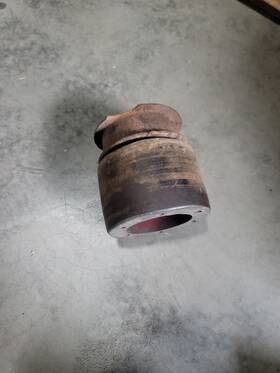
( Brand: Steam Engine ), ( Manufacturer Part Number: E3744 ), ( Model: DRIVE ), ( Engine Type: Hit Miss ), ( Type: Belt Pully Wheel ), ( Material: Iron ), ( Country Of Origin: United States )
Review STEAM ENGINE Vtg Inch 4.5 International Harvester Flat Belt Pulley Line Shaft Hit Miss
The **Steam Engine E3744 Vintage (VTG) 4.5" International Harvester Flat Belt Pulley Line Shaft Hit** is a meticulously preserved and highly functional piece of industrial heritage, embodying the robust engineering of early 20th-century agricultural machinery. This rare artifact originates from the legendary **International Harvester Company**, a pioneer in mechanical farming equipment, and represents a classic example of their iconic steam-powered line shaft systems. The **4.5-inch flat belt pulley** is a key component of this setup, designed to transmit power efficiently from the engine to auxiliary machinery such as threshers, sawmills, or other farm implements through a **flat belt drive system**. Crafted from durable cast iron or steel, the pulley features a smooth, wear-resistant surface with precise grooves to accommodate the belt, ensuring optimal grip and longevity. The **line shaft** a long, horizontal drive shaft extends from the engine, allowing power to be distributed across multiple tools in a workshop or barn, a hallmark of early industrial automation. This particular unit exhibits the classic **VTG (vintage) charm** with its weathered yet sturdy construction, complete with original or restored mechanical details such as the **flywheel, crankshaft, and connecting rods**, all of which contribute to its authentic operational character. Whether used as a functional power source for historical demonstrations, a centerpiece in a mechanical museum, or a prized collector s item for enthusiasts of steam technology, this engine stands as a testament to the ingenuity of an era when human labor was augmented by the relentless force of steam. Its inclusion in a collection or restoration project would not only preserve a slice of mechanical history but also offer a tangible connection to the evolution of agricultural and industrial machinery.
### **Pros and Cons of Buying a Vintage Steam Engine (E3744, 4.5" International Harvester Flat Belt Pulley Line Shaft Hit)**
#### **Pros**
1. **Historical and Collectible Value** Vintage steam engines, especially those from well-known manufacturers like International Harvester, hold significant historical and collector value. They represent an era of mechanical engineering and can be a unique addition to a museum, workshop, or personal collection.
2. **Functional and Operational** If properly maintained, this steam engine can still function as a working piece of machinery. It may be used for demonstrations, educational purposes, or even as a power source for small-scale operations (e.g., driving vintage machinery, pumps, or generators).
3. **Technical Interest and Learning Opportunity** Studying and restoring a steam engine provides hands-on experience with classic mechanical systems, including boilers, valves, pistons, and flywheels. This can be intellectually rewarding for engineers, hobbyists, or students of mechanical history.
4. **Potential for Customization and Modifications** Enthusiasts can modify or upgrade components to improve efficiency, aesthetics, or functionality. This includes modernizing controls, improving safety features, or adapting it for specific applications.
5. **Community and Networking** Owning a vintage steam engine connects you to a niche community of collectors, restorers, and engineers who share knowledge, parts, and restoration tips. Local steam engine clubs, conventions, and online forums provide support and camaraderie.
6. **Aesthetic Appeal** The craftsmanship and design of vintage steam engines are often visually striking. They can serve as a centerpiece in a workshop, garage, or even as part of a themed display (e.g., a farmstead, industrial museum, or steampunk-inspired space).
7. **Potential for Resale or Rental Income** If the engine is in good condition, it may appreciate in value over time. Alternatively, it could be rented out for events, film productions, or educational demonstrations, generating additional income.
---
#### **Cons**
1. **High Maintenance and Restoration Costs** Vintage steam engines require extensive care, including boiler inspections, valve adjustments, piston sealing, and general mechanical upkeep. Parts may be difficult or expensive to source, and professional labor (e.g., for boiler certification) can be costly.
2. **Safety Risks** Steam engines, especially older models, pose significant safety hazards. Boilers can explode if not properly maintained, and high-pressure steam or moving parts can cause severe injury. Proper safety measures (e.g., pressure gauges, safety valves, protective gear) are non-negotiable.
3. **Complexity of Operation** Unlike modern engines, steam engines require precise tuning, fuel management (often coal or wood), and constant monitoring. They are not "plug-and-play" and demand significant operator skill to run safely and efficiently.
4. **Limited Practical Use** While functional, a steam engine is generally not practical for everyday power needs. It is slow to start, inefficient compared to modern engines, and may not be suitable for applications requiring quick response or high power output.
5. **Space and Storage Requirements** Steam engines are large and heavy. They require dedicated space for storage, operation, and maintenance, which may not be feasible for everyone. Boilers, in particular, need ventilation and clearance to prevent accidents.
6. **Environmental and Emissions Concerns** Burning coal, wood, or other fuels for steam generation can produce air pollution, soot, and ash. This may not be ideal for indoor or urban settings and could violate local emissions regulations.
7. **Time-Consuming Restoration Process** If the engine is in poor condition, restoring it to working order can take months or years. This requires patience, research, and possibly collaboration with experts to ensure correctness.
8. **Depreciation Risk** Unlike some collectibles, vintage steam engines do not always appreciate in value. Market demand is niche, and unless it is a rare or highly sought-after model, resale value may not justify the investment.
9. **Legal and Regulatory Hurdles** Operating a steam engine may require permits, inspections, or compliance with boiler codes (e.g., ASME certification in the U.S.). Ignoring these can lead to fines or shutdowns.
10. **Opportunity Cost** The time, money, and effort spent on a steam engine could be allocated to other projects, hobbies, or investments with more immediate or practical returns.
---
### **Conclusion**
Buying a vintage steam engine like the E3744 International Harvester model is a passion-driven investment rather than a practical one. It offers unique historical, educational, and aesthetic benefits but comes with significant challenges, including high maintenance costs, safety risks, and limited practical utility. The decision to purchase should be based on your enthusiasm for restoration, mechanical history, and the willingness to commit to long-term care and upkeep.
If you are an experienced mechanic, a collector with deep pockets, or someone passionate about preserving industrial heritage, the rewards can be immense. However, if you prioritize convenience, cost-effectiveness, or modern functionality, this purchase may not be the right fit.
### **Recommendation**
- **Proceed if:** You have the space, budget, and time for restoration; you are safety-conscious and willing to invest in proper maintenance; and you genuinely enjoy the challenge of working with vintage machinery.
- **Avoid if:** You expect a quick or low-effort project, cannot commit to ongoing costs, or lack the mechanical knowledge to handle the complexities of steam engine operation.
- **Alternative Approach:** Consider starting with a smaller, simpler vintage engine or a modern steam kit to gain experience before tackling a larger project like the E3744. Alternatively, join a steam engine club or volunteer with a local historical society to gain hands-on experience before purchasing.
Ultimately, this purchase should align with your personal interests and resources not just as an acquisition, but as a long-term commitment.
Details:
Used as pictured condition Front fiber pulley is good Back cast iron has part of edge cracked off Fits on 1 3/4 shaft Sold.
part #: e3744 prices
- $30.50-$59.99
specifications stationaryenginezo:
- brand: Steam Engine
- mpn: E3744
- model: Drive
- engine type: Hit Miss
- type: Belt Pully Wheel
- material: Iron
- country of origin: United States
payments stationaryEnginezo:
- credit card: Mastercard
- wallet: Paypal
- other
shipping stationaryEnginezo:
- transit: 2-6 Days
- type: Calculated
- class: Standard
- service: USPS Ground Advantage
- carrier: USPS
- cost: $0.00
seller stationaryEnginezo:
- # reviews: 5264
- city: Fredonia, Wisconsin
- rating: 99.9%
general stationaryEnginezo:
- condition: Used
- Light Equipment Tools > Stationary Engines > Parts
returns stationaryEnginezo:
- paid by: Seller
- time: 30 Days
- policy: Returns Accepted
- method: Money back
offer stationaryEnginezo:
- options: Ship-to-home
- quantity: 1
- started: June 9, 2026
- sold: 0
- availability: In Stock
Steam Engine E3744 Is Similar To:
- 000000 Unbranded-generic Vintage Steam Engine (17% similar) Good luck buying. Up for offer is an antique Steam whistle. These would be an amazing addition to any old whistle collection. It looks like would most likely still work...(September 6th, 2017)
- Vintage Nos Usa Hastings 10-230 Engine Hit The Steam Sparkplug (17.7% similar) This is an old Hastings spark plug. This spark plug is unused. Free shipping and 14 day return assurance. Still has the cardboard sleeve...(February 2nd, 2015)
- 100v American No Large Antique Steam Engine Boiler Site Level Injection (28.7% similar) On the brass valve handles. Winner pays ups shipping. This bid is for a large Steam Engine boiler water site level marked 100V on the cast iron body and American injection co. This is pretty heavy. Sold as is found. I see no damage. The site glass is good...(August 11th, 2018)
- 10.5lbs 1 Steampunk Crosby Wide Large Engine 10 4 Gauge Antique Steam (29.1% similar) Happy to combine shipping but only when safe and appropriate. Very much an original antique item, still has Crosby paper label on the back describing operation and transportation of gauge. Untested condition. This is a large item and will come via FedEx as they are the most reasonable with larger ...(September 28th, 2015)
- Motor 60 Va Steam Starkstrom 110-125 Electric Volt Engine Reserve 441 1950 (22.4% similar) The pictures tell the story. No reserve from my 50 year collection. On off switch. The amounts above represent their charges for this piece, and that is why I list these charges prominently in each offer. I do not make any profit from this. 1950'S electric stagestruck motor VA volt Steam Engine no ...(February 14th, 2015)
- 1860s Clear Cdv Of Steam Engine Governor Plimpton Studios Lockport New York (32.7% similar) This CDC measures just under wide by 4 tall. This is a very fine example of a classic Steam driven mechanism in all it's shining detail and glory. It seems that Mr. Plumping was famous for taking photos of 19TH century machinery. Dating from the 1860'S is this rather unique albumen CDC which shows a...(October 9th, 2016)
- Engine 1 Oiler Lubricator 18647 4 Pint Steam Antique Hit Essex (38.8% similar) Essex 1/4 pint hit miss or Steam Engine oilier lubricator 18647...(February 25th, 2015)
- 1890s Rare Monitor Oil Co Can Cleveland Ohio Steam Hit Miss Engine Industrial (16.2% similar) Here is a great old oil can. Please review all pictures as they are to be considered as part of the. Can reads the following on the front. On the back of the can it states that this is ix cylinder oil. The monitor oil co refiners and manufacturers of petroleum and its products jobbers of linseed ...(August 21st, 2016)
- Cast Electric Base 1920s Toy Steam Weeden Iron Engine Horizontal (23.5% similar) The heir told me it was from the 1920'S. Red antique Weyden toy Steam Engine in vintage condition. Not sure of model can someone enlighten me measurements x 7 x cast iron base. It has a brass boiler with the Weyden stamp that reads volts , the removable safety knob with cork base is disintegrating...(February 9th, 2015)
- 1v-10 Tiny Power Live Steam Engine (18.5% similar) He had passed away since and its out of timing needs someone who knows how to do this. I have the paper work that explains time it. Its been a piece to me but the man who machined was skillful machinist tested on air never live Steam. Tiny power fully machined 1V-10 vertical live Steam Engine bore ...(May 19th, 2018)
- Nice Oiler Gas 2-feed Kipp Tractor Engine Madison Hit Lubricator Steam (24.1% similar) These boilers are extremely difficult to find in the wild or even at swap meets so if you've been looking for one don't miss your chance on this one. It mounts with two holes about inches apart on center. The pictures tell the story. The outside of the case could also use a bit of cleaning but the ...(January 30th, 2015)