ENGINE D303 Antique Cast Iron Flat Belt Pulley Line Shaft Idler Hit 14X3X1-1/2
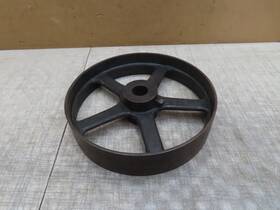
( Brand: Engine ), ( Manufacturer Part Number: D303 ), ( Model: IDLER ), ( Engine Type: Hit Miss ), ( Type: Belt Pully Wheel ), ( Material: Cast Iron ), ( Materials Sourced From: United States )
Review ENGINE Vtg Antique Cast Iron Flat Belt Pulley Line Shaft Hit Miss 14x3x1-1/2
The **D303 Vintage Antique Cast Iron Flat Belt Pulley** from the classic line shaft era represents a meticulously crafted piece of industrial heritage, embodying both functional robustness and timeless mechanical elegance. Forged from durable cast iron a material renowned for its strength, heat resistance, and longevity this pulley exemplifies the engineering prowess of an earlier era, where precision and durability were paramount. With a **14-inch outer diameter**, it strikes a balance between compact efficiency and substantial torque transmission, making it ideal for applications in antique machinery, restoration projects, or as a collector s piece for enthusiasts of mechanical history. The **3-inch face width** ensures a broad contact surface for the flat belt, reducing slippage and maximizing power transfer, while the **1 -inch bore** provides a sturdy mounting point compatible with vintage line shafts, crankshafts, or custom setups. The pulley s **flat belt groove** is designed to accommodate traditional leather, canvas, or synthetic belts, offering versatility for both original and modern adaptations. Its **antique finish** often featuring subtle patina, slight wear, or faint tool marks adds character, hinting at decades of potential use in workshops, factories, or agricultural settings. Whether repurposed in a restored steam engine, a hand-cranked woodworking lathe, or displayed as a centerpiece in a mechanical museum, this pulley serves as a tangible link to the industrial revolution s mechanical ingenuity. Its solid construction and classic design make it not just a functional component, but a piece of history waiting to be integrated into a new era of craftsmanship or preserved as a relic of yesteryear s engineering brilliance.
**Pros and Cons of Buying a Vintage Cast Iron Flat Belt Pulley (Engine D303 Line Shaft, Hit 14x3x1-1/2)**
### **Pros**
1. **Historical and Mechanical Value** This pulley is part of a classic industrial-era line shaft system, often found in antique machinery like the D303 engine. For collectors or enthusiasts of vintage industrial equipment, it holds nostalgic and historical significance.
2. **Durability and Strength** Cast iron is known for its robustness and resistance to wear, making these pulleys long-lasting if properly maintained. They can withstand heavy loads and prolonged use, which is advantageous in industrial or restoration settings.
3. **Compatibility with Vintage Systems** If you are restoring or operating a period-correct machine (such as a D303 engine or similar line shaft-driven equipment), this pulley will fit seamlessly without the need for modifications. It ensures authenticity in mechanical reproductions.
4. **Potential for Customization** Cast iron pulleys can often be machined or modified to fit specific applications, allowing for adjustments in belt tension, alignment, or speed ratios if needed.
5. **Aesthetic Appeal** The heavy, industrial look of cast iron pulleys adds character to workshops, museums, or themed spaces. They can serve as decorative elements while also functioning as mechanical components.
6. **Resale or Trade Value** Well-preserved vintage pulleys may have value among collectors or in specialized markets, particularly if they are rare or associated with a notable engine model like the D303.
---
### **Cons**
1. **Limited Availability of Replacement Parts** Finding exact replacements for vintage cast iron components can be difficult. If the pulley wears out or fails, sourcing a duplicate may require extensive searching or custom fabrication.
2. **Maintenance Requirements** Cast iron is prone to rust if not properly lubricated and protected. Over time, bearings or mounting surfaces may seize, requiring disassembly, cleaning, and re-greasing. Neglect can lead to premature failure.
3. **Weight and Installation Challenges** Cast iron pulleys are heavy, which can make installation or relocation difficult. They may require sturdy mounting hardware and careful handling to prevent damage.
4. **Compatibility with Modern Systems** If you are integrating this pulley into a modern or hybrid setup, alignment, belt tensioning, and speed matching may require additional components (e.g., modern bearings, tensioners, or belts) that weren t originally intended for use with it.
5. **Cost of Restoration or Reproduction** If the pulley is damaged or worn, restoring it may involve machining, re-casting, or sourcing a new casting, all of which can be expensive. In some cases, it may be cheaper to replace it with a modern equivalent.
6. **Potential for Misalignment or Wear** Over time, the pulley s grooves or mounting surfaces may wear unevenly, leading to belt slippage or excessive vibration. This can reduce efficiency and may require frequent adjustments.
7. **Safety Concerns with Vintage Components** Older cast iron parts may not meet modern safety standards for stress limits or material integrity. If used in high-load applications, they could pose a risk of catastrophic failure if not inspected regularly.
---
### **Conclusion**
Buying a vintage cast iron flat belt pulley like the one described is a worthwhile investment if you are restoring a period-correct machine, collecting industrial artifacts, or working in a setting where authenticity and durability are priorities. The historical value, strength, and compatibility with classic systems make it a desirable component for enthusiasts. However, the challenges of maintenance, part availability, and potential compatibility issues with modern setups should be carefully considered.
If your primary goal is functionality in a modern or mixed-use environment, weighing the pros and cons against the convenience of modern alternatives (such as steel or aluminum pulleys) may be necessary. For collectors or those committed to preserving vintage machinery, the pulley s unique qualities justify the effort required to keep it in working order.
### **Recommendation**
- **Purchase if:** You are restoring a D303 engine or similar vintage equipment, you have access to proper maintenance resources, and you value historical authenticity.
- **Consider alternatives if:** You need a pulley for a modern application where ease of replacement and lower maintenance are priorities. In that case, a high-quality modern cast iron or steel pulley may be a more practical choice.
- **Plan ahead:** Ensure you have access to bearings, lubrication, and machining tools if restoration or long-term use is required. Document the pulley s condition and any modifications made for future reference.
Details:
Up for sale is an old 14 inch in diameter flat belt pulley. Pulley is in overall great condition with no cracks or repairs. It weighs 18.75 pounds and the set screw turns freely. There is also a hole in the hub for grease fitting and there channel of.
Please see pics for measurements. Once I have received. Looks like it fits a 1-1/2 shaft.
part #: d303 price
- $40.84
specifications stationaryenginezo:
- brand: Engine
- mpn: D303
- model: Idler
- engine type: Hit Miss
- type: Belt Pully Wheel
- material: Cast Iron
- materials sourced from: United States
payments stationaryEnginezo:
- credit card: Diners-club
- other
- wallet: Paypal
general stationaryEnginezo:
- Light Equipment Tools > Stationary Engines > Parts
- condition: Used
offer stationaryEnginezo:
- started: March 11, 2026
- sold: 0
- quantity: 1
- availability: In Stock
- options: Ship-to-home
seller stationaryEnginezo:
- # reviews: 10692
- city: Alamance, North Carolina
- rating: 99.8%
returns stationaryEnginezo:
- policy: Returns Accepted
- paid by: Buyer
- method: Money back
- time: 30 Days
shipping stationaryEnginezo:
- class: Standard, Expedited
- cost: $36.39
- carrier: FedEx, UPS, USPS
- type: Calculated
- service: FedEx Ground / FedEx Home Delivery, UPS Ground, USPS Priority Mail, USPS Ground Advantage
- transit: 3-7 Days
Engine D303 Is Similar To:
- Gas Hand Biddle Tachometer Engine Wow 30-50 Original Hit Held Dynamo 000rpm (25.6% similar) The case measures about 7 inches long. It is in excellent slightly used condition and is in it's original case with all of the attachments still in their places. They are great to have at your disposal when determining the speed of gas or steam Engines or dynamos or other equipment that are being ...(March 5th, 2015)
- 0024847118056 New Briggs Stratton Gross Hp Vanguard Engine Shaft (29% similar) 97 x part dimensions length in 18 width 15 country of origin JP package type cardboard box oil filter yes PTO height . 75 part material type multiple package dimensions length in crankshaft height , 6/1 2, 7/3 4 bore x stroke ship weight lbs. 75 package dimensions width in 18 height ...(August 13th, 2018)
- 01645 Generac Hp Horizontal Shaft Ohvi Engine (27% similar) Engine has electric and manual starter options. Engine has a full flow oil filter and low pressure shut-down. 8 hp horizontal shaft Engine...(June 14th, 2018)
- 1 1-2 Hp Mccormick Deering Vintage International Harvester Hit Miss Gas Engine (25.2% similar) Posted locally as well. Will remove ad if sold...(September 10th, 2018)
- 1 1-2 Ounce Essex Vintage Hit And Miss Engine Oiler (15.2% similar) Essex hit and miss Engine oilier ounce is used in very good condition, minor scratches see photos...(June 12th, 2018)
- Kw Farm Engine Ihc Magneto Tractor Nice Hit 10-20 Titan (30.9% similar) It is missing the cover that goes over the magnets. Take a look at the pictures and decide for yourself, they don't get much nicer than this. No reserve so bid to win. I tested it for spark and didn't get any, I'm sure all it probably needs is a good points filing, I never even took the points cover...(January 18th, 2015)
- Vintage Nos Usa Hastings 10-230 Engine Hit The Steam Sparkplug (16.8% similar) This is an old Hastings spark plug. This spark plug is unused. Free shipping and 14 day return assurance. Still has the cardboard sleeve...(February 2nd, 2015)
- 10-32 Thread Gas Valve Drain Model Hit Mini Brass Engine Unspouted (24.5% similar) Brass un spouted drain valve, spring load gate type. length 1 height 3/4 , mounting thread fine thread made by debility machine inc. Combine items and save on shipping...(February 15th, 2015)
- 100150 Antique Vintage Maytag Model 72 D Twin Cylinder Hit Miss Gas Engine (33.5% similar) Antique vintage Maytag model 72TWIN cylinder hit miss gas Engine looks to be complete does have compression kick start looks to be wrong one. Not tested as seen in pictures ships out at around 50 lbs...(August 6th, 2016)
- Tp 7 Stratton Engine Dov Briggs 100602-0550 Ready Start Vertical Shaft (29.1% similar) We rely on your supplied information to suggest a correct replacement Engine. 0TP Briggs div Engine 25MM x shaft, tapped 3/8 with 1/4 key way. Universal replacement Engine for ransomer, Benton, snapper, MDT, Aries, Murray, and other rotary mowers. Fixed speed throttle. No prime, no choke ready start...(January 27th, 2015)
- 100v American No Large Antique Steam Engine Boiler Site Level Injection (31.6% similar) On the brass valve handles. Winner pays ups shipping. This bid is for a large steam Engine boiler water site level marked 100V on the cast iron body and American injection co. This is pretty heavy. Sold as is found. I see no damage. The site glass is good...(August 11th, 2018)