BRIGGS STRATTON 58379 Antique Fh Aircooled Gas Engine Neat
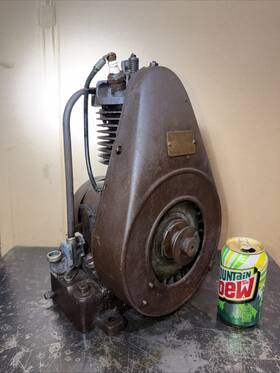
( Brand: Briggs Stratton ), ( Manufacturer Part Number: 58379 ), ( Model: BRIGGS STRATTON 58379 ), ( Part Type: Engine ), ( Material: Brass )
Review BRIGGS STRATTON Antique Fh And Aircooled Gas Engine Project Brass Tag Neat
The **Briggs & Stratton 58379 Antique FH Air-Cooled Gas Engine** is a meticulously crafted, vintage powerhouse that embodies the timeless engineering of a bygone era, blending rugged durability with classic charm. Part of Briggs & Stratton s legendary line of small engines, this **FH model** (originally designed in the mid-20th century) stands as a testament to the brand s commitment to simplicity, reliability, and mechanical elegance. With its **air-cooled, single-cylinder, four-stroke operation**, this engine delivers a smooth, unadulterated performance that harks back to an age when power was unapologetically mechanical. The **cast iron cylinder and flywheel housing** lend it an unmistakable weight and substance, while the **chrome-plated components**, including the spark arrestor and exhaust, add a touch of vintage sophistication that turns heads at any antique engine show or restoration project.
Measuring approximately **11.5 inches in length and 10 inches in height**, the **58379 FH engine** is compact yet robust, making it ideal for a variety of applications from classic lawnmowers and vintage tractors to antique generators, well pumps, or even as a centerpiece in a mechanical display. Its **0.37 cubic inch displacement** (though often referred to in older documentation as a "37" series) may be modest by modern standards, but it compensates with **raw, unfiltered torque** and a distinctive throaty exhaust note that resonates with enthusiasts of old-school power. The engine features a **pull-start mechanism**, a hallmark of mid-century design, which, while requiring a bit more effort than modern electric starts, adds to its authentic, hands-on appeal. The **magnetic ignition system** ensures reliable spark delivery, while the **oil bath air filter** keeps intake clean without the need for complex maintenance though regular oil changes and spark plug adjustments remain essential for peak performance.
What truly sets this engine apart is its **restorable authenticity**. Many of these FH models were produced in the **1950s and 1960s**, and while some may have seen heavy use, others remain in near-mint condition, their original paintwork often in shades of **olive drab, bright red, or sunburst yellow** still vibrant after decades. The **serial number stamped on the flywheel** provides a window into its history, allowing collectors to trace its origins and verify its age. Whether you re a restorer seeking a period-correct powerplant for a vintage machine or a collector drawn to the engine s nostalgic allure, the **Briggs & Stratton 58379 FH** offers a perfect blend of functionality and history. Its **timeless design, mechanical simplicity, and unmistakable character** make it not just a tool, but a piece of mechanical heritage one that continues to turn heads and fire up imaginations in the world of antique engines.
### Briggs & Stratton 58379 Antique FH Air-Cooled Gas Engine Overview
The **Briggs & Stratton 58379 Antique FH** is a classic air-cooled, single-cylinder, horizontal-shaft gasoline engine. It was originally designed for small generators, pumps, and other applications requiring reliable, low-maintenance power. Below is a detailed breakdown of its pros and cons, followed by a conclusion and recommendation.
---
### **Pros**
1. **Proven Reliability and Durability**
The Briggs & Stratton FH series is well-known for its robust construction and long service life, especially when properly maintained. Many of these engines have lasted decades with minimal wear, making them ideal for collectors or those seeking a backup power source.
2. **Simple and Easy to Maintain**
The engine features straightforward mechanics with fewer components than modern counterparts. Basic maintenance such as oil changes, spark plug replacements, and carburetor adjustments can be done with basic tools. This makes it accessible for DIY enthusiasts or those without advanced mechanical skills.
3. **Air-Cooled Design**
No need for a radiator or coolant system, reducing complexity and potential failure points. This also means it can operate in a wider range of temperatures without overheating concerns.
4. **Compatibility with Vintage Equipment**
The FH engine is designed to fit into older generators, pumps, and machinery, making it a viable option for restoring or repurposing antique equipment. It s also a popular choice for homemade projects like water pumps, well drills, or even small-scale industrial applications.
5. **Lower Operating Costs**
Gasoline is relatively inexpensive compared to other fuels, and the engine consumes fuel efficiently for its power output. Parts are also widely available, though some may require sourcing from specialty suppliers.
6. **Historical and Collectible Value**
For enthusiasts, antique Briggs & Stratton engines hold nostalgic and collector value. They are often sought after for their historical significance and craftsmanship, which can appreciate over time.
7. **Versatility**
The horizontal-shaft design allows for easy integration into various applications, including stationary generators, portable power setups, or even as a power source for custom-built devices.
8. **Minimal Vibration and Noise (Compared to Some Alternatives)**
While not silent, the FH engine operates more smoothly than many older engines, reducing wear on connected equipment and making it more suitable for prolonged use.
---
### **Cons**
1. **Age and Wear**
As an antique engine, it may already exhibit signs of wear, such as worn piston rings, cracked gaskets, or a fouled carburetor. Without proper maintenance records, the true condition of the engine is unknown, which could lead to unexpected repairs or failure.
2. **Limited Power Output**
The 58379 model typically produces around **1/2 to 3/4 horsepower**, which is sufficient for small tasks but insufficient for heavy-duty applications like large generators or industrial machinery. This limits its practical use for modern high-demand projects.
3. **Fuel and Emissions Concerns**
Older engines like this one often have carburetions that are less efficient and may produce more emissions than modern fuel-injected engines. They also require leaded gasoline in some cases, which is increasingly difficult to obtain. Running it on modern unleaded fuel may require modifications.
4. **Parts Availability**
While Briggs & Stratton parts are still available, some components such as specific gaskets, seals, or carburetor parts may be harder to find. Prices for rare parts can also be higher than for new engines.
5. **Starting Difficulty**
Antique engines, especially those with recoil starters, can be harder to start in cold weather or if the battery (if equipped) is weak. Some may require manual cranking, which can be labor-intensive.
6. **Potential for Hidden Damage**
Without a thorough inspection, the engine could have internal damage (e.g., bent rods, worn bearings, or cracked blocks) that isn t immediately visible. This could lead to costly repairs or a complete engine replacement.
7. **No Modern Safety Features**
Older engines lack modern safety features such as automatic shutoff mechanisms, vibration sensors, or low-oil alerts. This means the user must manually monitor the engine s operation, increasing the risk of damage or accidents.
8. **Environmental Regulations**
In some areas, operating older engines may be restricted due to emissions standards. Local laws should be checked before use, especially for prolonged operation.
9. **Learning Curve for Restoration**
If the engine is in poor condition, restoring it to working order may require mechanical skills beyond basic maintenance. This could involve machining, welding, or sourcing replacement parts.
10. **Resale Value Depends on Condition**
While some antique engines appreciate in value, others depreciate quickly if they are not well-maintained. The resale market is niche, and finding a buyer may be difficult unless the engine is in pristine condition or has historical significance.
---
### **Conclusion**
The **Briggs & Stratton 58379 Antique FH** engine is a fantastic choice for enthusiasts, collectors, or those working on vintage machinery projects. Its reliability, simplicity, and historical value make it a rewarding purchase for the right buyer. However, it is not ideal for modern high-power applications due to its limited output and age-related limitations.
If you are purchasing this engine for a **restoration project, a backup power source, or a hobbyist application**, it can be an excellent investment with proper care. On the other hand, if you need a **high-performance, low-maintenance engine for heavy-duty or commercial use**, a modern replacement would be a better choice.
---
### **Recommendation**
1. **Buy with a Thorough Inspection**
Before purchasing, have the engine inspected by a mechanic familiar with vintage Briggs & Stratton models. Look for signs of internal wear, compression leaks, and overall structural integrity. Request maintenance records if available.
2. **Consider the Intended Use**
- **For restoration or hobby projects:** The FH engine is a great fit if you enjoy working with vintage machinery.
- **For a backup generator or small power needs:** It can work well if you are prepared for occasional maintenance.
- **For heavy-duty or commercial use:** Avoid this engine; opt for a modern, high-efficiency model instead.
3. **Budget for Repairs and Maintenance**
Antique engines require regular upkeep. Factor in costs for oil changes, carburetor cleaning, spark plug replacements, and potential major repairs (e.g., piston replacement, crankshaft machining).
4. **Source Parts in Advance**
If you plan to restore the engine, order critical parts (e.g., gaskets, seals, carburetor components) before starting work to avoid delays.
5. **Check Local Regulations**
Ensure that operating the engine complies with emissions and noise ordinances in your area, especially if you plan to use it frequently.
6. **Consider a Modern Alternative if Needed**
If your primary goal is reliable, high-performance power, a modern Briggs & Stratton engine (e.g., the **105657** or **105658** series) or a small diesel generator may be a better long-term investment.
---
### **Final Verdict**
The **Briggs & Stratton 58379 Antique FH** is a **strong choice for collectors, restorers, and hobbyists** who appreciate its historical value and simplicity. For most modern practical applications, however, a newer engine would be more practical. If you proceed with this purchase, prioritize condition, maintenance, and compatibility with your project to maximize its lifespan and enjoyment.
Details:
Spark plug is broken. No compression. I am pretty sure this engine has not been ran ever since it was retired off the farm years ago. Spark plug wire is brittle.
Rocker arm stand has been welded. Engine does turn over. The kick start mount on the gas tank base is broken. Great for parts or restoration.
This item Will need completely torn down and gone through. Nice brass tag. I can hear a lot of air go past the exhaust valve when turning it over. Both valves are not stuck.
See all pictures for the absolute best. Neat old Briggs Stratton model FH straight fin Aircooled gas engine. Wires going to the kill switch are broken. The threads for the exhaust pipe are bad/rusted.
Lots of dirt and grease build up. Carburetor looks to be in pretty solid condition. Please see pictures for the absolute best.
part #: 58379 prices
- $65.00-$1300.00
specifications stationaryenginezo:
- brand: Briggs Stratton
- mpn: 58379
- model: Briggs Stratton 58379
- part type: Engine
- material: Brass
seller stationaryenginezo:
- rating: 99.8%
- city: Lockridge, Iowa
- # reviews: 2876
returns stationaryenginezo:
- policy: No Returns
offer stationaryenginezo:
- options: Ship-to-home
- best offers: True
- sold: 0
- quantity: 1
- availability: In Stock
- started: March 4, 2026
shipping stationaryenginezo:
- type: Fixed
- service: UPS Ground
- class: Standard
- cost: $115.00
- carrier: UPS
- transit: 3-9 Days
payments stationaryenginezo:
- wallet: Google-pay
- other
- credit card: Visa
general stationaryenginezo:
- Light Equipment Tools > Stationary Engines > Parts
- condition: For parts or not working
Briggs Stratton 58379 Is Similar To:
- 0024847118056 New Briggs Stratton Gross Hp Vanguard Engine Shaft (38.4% similar) 97 x part dimensions length in 18 width 15 country of origin JP package type cardboard box oil filter yes PTO height . 75 part material type multiple package dimensions length in crankshaft height , 6/1 2, 7/3 4 bore x stroke ship weight lbs. 75 package dimensions width in 18 height ...(August 13th, 2018)
- 047282017593 New Briggs Stratton Commercial Vertical Engine (38.3% similar) 41MM oil capacity 64 fl. For shipping cost. 90 in bore x stroke. 90 part dimensions width in 16 height 18 package length rpm 3300 fuel filter yes pump flywheel type heavy tank included no gasoline governor system mechanical cylinders qty. 5 throttle control remote single UPC 93 country of ...(August 13th, 2018)
- 047282148457 New Briggs Used On Sand And Salt Spreaders (32.1% similar) 5 hp which is what the engine may be marked but it actually INCHESSTROKE2. Picture shows SYSTEM12-VOLT w recoil backup ignition system electronic CAPACITY48 oz intake cleaner dual element fuel tan knot rotation SIZE1 x inch crankshaft DIAMETER1 crankshaft length 3-5 32 end tapped SIZE7 16-...(February 1st, 2019)
- 100200 Operating Stratton Briggs Point Manual 4hp 100299 Operators Engine (31% similar) Free shipping. Free shipping. Guaranteed satisfaction. Avoid frustration and wasted time. Read a manual. Guaranteed satisfaction. Quality manuals for your vintage small engines, tractors, implements, equipment and more...(January 22nd, 2015)
- Point 4hp Operators Stratton 100299 Operating 100200 Engine Manual Briggs (38.7% similar) Free shipping. Quality manuals for your vintage small engines, tractors, implements, equipment and more. A picture for other manuals Briggs and Stratton operating instructions printed manual model numbers to rated. Guaranteed satisfaction. Guaranteed satisfaction. Hp new reprint of the original ...(February 22nd, 2015)
- Tp 7 Stratton Engine Dov Briggs 100602-0550 Ready Start Vertical Shaft (36.8% similar) We rely on your supplied information to suggest a correct replacement engine. 0TP Briggs div engine 25MM x shaft, tapped 3/8 with 1/4 key way. Universal replacement engine for ransomer, Benton, snapper, MDT, Aries, Murray, and other rotary mowers. Fixed speed throttle. No prime, no choke ready start...(January 27th, 2015)
- 100900 Briggs Stratton Rare Org Specifications Power Curve Info Sheet Series (30.4% similar) ...(March 27th, 2018)
- 100902-0015-01 Briggs Stratton Vintage New Engine Hp Rare Nos (46.2% similar) What I have here is a Briggs Stratton vintage 4 horsepower engine comes with copy of parts list for this unit. Please see pictures. Please see picture of crank shaft options. Engine is new never been started or installed ,shows some shelf wear...(July 25th, 2018)
- 10148 Briggs Stratton Vintage Fh (38.6% similar) Item stamped as fh, engine no. For bid is a Briggs Stratton fh motor that does turn over but never had it running myself. Engine has wear throughout...(September 4th, 2017)
- Gas Tag Fh Briggs Antique Brass Model Stratton Serial 101843 Engine (36.2% similar) Good solid tag. This is a used brass serial tag for a model fh Briggs Stratton gas engine. Mounting screws included. This is a used item being sold as is as shown thanks...(February 3rd, 2015)
- 103904 Briggs And Stratton Antique Vintage Model Fh Engine (48.6% similar) Not rotted through anywhere. Serial number is excellent candidate for restoration. Missing kick pedal. Turns over good. Valves are stuck. No cracks or breaks. Will pack very carefully. Nice carburetor. This is a nice barn find BS model fh...(September 3rd, 2018)