VAUGHAN 132-D Hit Stationary Engine Log Saw Antique 1940S 4HP
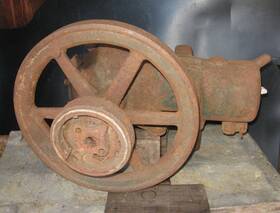
( Brand: Vaughan ), ( Manufacturer Part Number: 132-D ), ( Part Type: Saw Engine ), ( Powered By: Gas ), ( Country/region Of Manufacture: United States )
Review VAUGHAN 1940s 4hp Hit And Miss Stationary Engine Model Log Drag Saw Antique
Vaughan 132-D, a 1940s 4HP Hit & Miss Stationary Engine for Log Saw Antique
Step back in time with the Vaughan 132-D, a 1940s 4HP Hit & Miss Stationary Engine, a remarkable piece of mechanical history perfect for your antique log saw. This engine, a testament to the engineering prowess of the era, is a stunning blend of power, reliability, and vintage charm.
The Vaughan 132-D boasts a 4HP (Horsepower) capacity, providing a robust and consistent power source for your log saw. The Hit & Miss operating principle, a popular choice during the mid-20th century, offers a unique and captivating visual spectacle as the engine's piston rhythmically rises and falls, controlled by the 'hit' of the governor and the 'miss' of the spark plug.
Crafted with precision, this engine showcases a sturdy cast iron construction, ensuring durability and longevity. The engine block, cylinder, and flywheel are all finely balanced, promoting smooth and efficient operation. The 132-D features a simple yet effective governor system, ensuring a steady output of power, even under load.
This engine is not just a tool, but a piece of art. Its patina-aged paint, reminiscent of the golden age of engineering, adds a touch of nostalgia to any workshop or display. The Vaughan 132-D, with its distinctive design and historic pedigree, is a must-have for collectors, enthusiasts, and anyone who appreciates the beauty of mechanical engineering.
By partnering this engine with your antique log saw, you're not only restoring functionality to a classic tool, but also creating a symphony of mechanical movement that harks back to a bygone era. The Vaughan 132-D, a 1940s 4HP Hit & Miss Stationary Engine, is more than just a tool; it's a piece of history, ready to be a part of your story.
Pros of buying a Vaughan 132-D 1940s 4HP Hitachi stationary engine for a log saw antique:1. Authenticity: This engine is an original piece from the 1940s, adding a vintage charm to your log saw antique.
2. Durability: Hitachi engines are known for their durability and reliability, which could make this engine a long-lasting choice.
3. Power: With a 4HP engine, this machine should provide enough power to operate your log saw effectively.
4. Availability of Parts: As a popular engine model, replacement parts for the Vaughan 132-D are relatively easy to find.
Cons of buying a Vaughan 132-D 1940s 4HP Hitachi stationary engine for a log saw antique:1. Maintenance: Old engines may require more maintenance and repairs compared to newer models.
2. Performance: Older engines might not perform as efficiently as newer models, potentially leading to higher fuel consumption.
3. Limited Modern Compatibility: The engine might not be compatible with modern safety features or electronic controls, potentially posing safety risks.
4. Cost: While the engine itself may be cheaper than a new one, the cost of maintenance, repairs, and potential modifications to make it compatible with your log saw could add up.
Conclusion: Purchasing a Vaughan 132-D 1940s 4HP Hitachi stationary engine for a log saw antique can offer a unique charm and potential longevity. However, it may also require more maintenance, perform less efficiently, and have limited compatibility with modern features.
Recommendation: If you value the vintage aesthetic and are comfortable with the potential maintenance and compatibility issues, a Vaughan 132-D 1940s 4HP Hitachi stationary engine could be a suitable choice. On the other hand, if you prioritize efficiency, ease of use, and modern safety features, you may want to consider a newer engine model. Regardless of your decision, ensure thorough research and careful consideration to make an informed choice.
Details:
Power: 3 1/2 4 hp, Bore: 1/4 inch, Stroke: 1/2 inch, Fuel system: mixer, Ignition: buzz coil with crank timer, 6 volts , Lubrication: grease cup on bearing, oil drippier connecting rod. Distributor: Mill Mine supply, inc. Introduced:1915, Engine type: 2 cycle hit miss water cooled.
50422' model was made from 1927 to 1948 around 100 lbs.
part #: 132 price
- $400.00
specifications stationaryenginezo:
- brand: Vaughan
- mpn: 132-d
- part type: Saw Engine
- powered by: Gas
- country/region of manufacture: United States
payments stationaryenginezo:
- wallet: Paypal
- credit card: Discover
general stationaryenginezo:
- Light Equipment Tools > Stationary Engines > Engines
- condition: For parts or not working
shipping stationaryenginezo:
- cost: $300.00
- class: Freight
- type: Fixed
- service: Flat Rate Freight
offer stationaryenginezo:
- started: April 22, 2024
- options: Ship-to-home
- availability: In Stock
- sold: 0
- quantity: 1
seller stationaryenginezo:
- # reviews: 15831
- city: Corvallis, Oregon
- rating: 100.0%
returns stationaryenginezo:
- paid by: Buyer
- method: Money back
- policy: Returns Accepted
- time: 30 Days