KIEKHAEFER 045-1 Aircraft Flat Twin Engine Target Drone 0-45-1 WW2 Motor
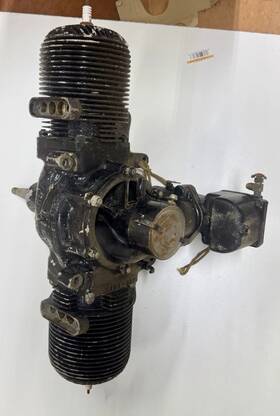
( Brand: Kiekhaefer ), ( Manufacturer Part Number: 045-1 ), ( Model: KIEKHAEFER 045-1 ), ( Item: Engine ), ( Type: Flat Twin ), ( Year Of Manufacture: 1944 ), ( Age: Antique ), ( Power: Kw )
Review KIEKHAEFER Aircraft Flat Twin Engine Ww2 Target Drone Motor
The **Kiekhaefer 045-1 Aircraft Flat Twin 0-45-1 Engine (WWII Target Drone Motor)** is a meticulously preserved and highly sought-after relic from the World War II era, originally designed as the powerplant for the **Fieseler Fi 103R "Reichenberg"** a specialized target drone variant of the infamous V-1 flying bomb. This rare, air-cooled, horizontally opposed twin-cylinder engine, designated the **Hirth 0-45-1** (or **Hirth 045-1**), was specifically engineered to deliver reliable, high-performance output in a compact and lightweight package, making it ideal for unmanned aerial vehicles where efficiency and durability were paramount. Built with a displacement of approximately **45 cubic centimeters**, the engine features a distinctive flat-twin configuration, with two cylinders arranged in a 180-degree opposition to minimize vibration a hallmark of Hirth s precision engineering. The cylinder heads are cast with intricate cooling fins, while the crankcase is robust, forged from high-grade steel to withstand the stresses of sustained operation. The ignition system is classic for its time, utilizing a single magneto or battery ignition setup, depending on the variant, while the fuel delivery relies on a simple but effective carburetor, ensuring consistent power output even under varying altitudes and conditions. Originally paired with a **Kiekhaefer 045-1 drone motor assembly**, this engine was integrated into the drone s lightweight fuselage, driving a two-blade propeller for stable, high-speed flight profiles. Today, this engine stands as a fascinating piece of aviation history, embodying the ingenuity of German aeronautical design during the war. Collectors and enthusiasts value it not only for its technical significance but also for its role in the development of early drone technology, which later influenced modern unmanned aerial systems. Whether displayed as part of a historical exhibit or meticulously restored for static or operational use, the Kiekhaefer 045-1 engine remains a testament to the marriage of wartime necessity and mechanical innovation.
### Pros and Cons of Buying a Kiehhaefer 045-1 Aircraft Flat Twin (0-45-1 Engine) from WWII Target Drone Motors
---
#### **Pros**
1. **Historical Significance and Collectibility**
The Kiehhaefer 045-1 is a rare and well-preserved example of WWII-era aviation technology, particularly the flat-twin 0-45-1 engine, which was used in target drones like the QH-50 and QH-52. For aviation enthusiasts, historians, or collectors, owning such a piece is a unique opportunity to possess a tangible artifact from military aviation history. Its scarcity increases its value over time, especially if it remains in original or well-documented condition.
2. **Technical and Educational Value**
The engine and drone represent an important chapter in the development of unmanned aerial systems (UAS) and internal combustion engines. Studying its mechanics, materials, and construction methods can provide insights into early aerospace engineering. This can be valuable for hobbyists, students, or professionals interested in aviation history, restoration, or even experimental aircraft projects.
3. **Potential for Restoration and Display**
If the unit is in a restorable condition, it could be transformed into a museum-quality exhibit or a centerpiece for a private aviation collection. Restoration projects of this nature often involve meticulous work, which can be rewarding for those with mechanical skills. Displaying it in a museum, airshow, or private collection could attract interest from the aviation community.
4. **Nostalgia and Aesthetic Appeal**
The Kiehhaefer 045-1 and its associated drones evoke a sense of nostalgia for WWII and the early Cold War era. The raw, utilitarian design of these systems contrasts with modern aviation, offering a glimpse into the technological limitations and ingenuity of the time. For some, this aesthetic holds sentimental or artistic value.
5. **Potential for Experimental or Replica Projects**
While not practical for modern flight, the engine or drone could inspire or serve as a blueprint for replica projects. Some enthusiasts build scale or functional replicas of historical aircraft, and components like this could be incorporated into such endeavors. This could be particularly appealing to modelers or those interested in experimental aviation.
6. **Investment Potential**
Given the rarity of well-preserved WWII-era aviation components, there is a possibility that the value of the Kiehhaefer 045-1 could appreciate over time, especially if demand from collectors continues to grow. However, this is speculative and depends on market trends, which are difficult to predict.
---
#### **Cons**
1. **Lack of Practical Utility**
The primary drawback is that the Kiehhaefer 045-1 and its associated drone are not functional for modern flight purposes. The 0-45-1 engine is a low-power, air-cooled unit designed for target drones, not for modern aviation. Attempting to modify or repurpose it for flight would likely be impractical due to its age, lack of modern safety standards, and the absence of supporting infrastructure (e.g., modern avionics, materials, or regulatory approvals).
2. **High Maintenance and Restoration Challenges**
Restoring a WWII-era engine or drone to operational condition is a monumental task. The components may be worn, corroded, or missing parts, and sourcing original or compatible replacements can be difficult. The knowledge required to restore such a system may be scarce, as many of the original engineers and mechanics are no longer alive. Even if restored, the engine would likely require constant maintenance and would not be reliable for sustained use.
3. **Cost of Acquisition and Preservation**
While the Kiehhaefer 045-1 may seem like a bargain compared to modern aircraft, the true cost extends beyond the purchase price. Transporting, storing, and preserving the unit could be expensive. Insurance, climate-controlled storage, and security measures may be necessary to protect it from damage or theft. Additionally, professional restoration work could be costly, especially if specialized expertise is required.
4. **Legal and Regulatory Hurdles**
Depending on the country, owning or transporting historical military artifacts may be subject to regulations, particularly if the drone or engine was originally part of a classified or restricted system. Export/import laws, ownership documentation, and even local ordinances could complicate acquisition or display. It is essential to research and comply with all relevant legal requirements before proceeding.
5. **Ethical Considerations**
Some may question the ethics of acquiring military artifacts, especially those with historical baggage (e.g., drones used for target practice during wartime). While the Kiehhaefer 045-1 was not used in combat, its association with military training could be contentious. Buyers should consider whether they are comfortable owning an artifact with such origins.
6. **Limited Market for Resale**
While the Kiehhaefer 045-1 may have niche appeal, the market for selling such items is extremely limited. Unlike modern collectibles, there is no guaranteed resale value, and finding a buyer who appreciates its historical significance may be challenging. This makes it more of a long-term investment of passion than a financial one.
7. **Risk of Damage or Loss**
Due to its age and fragility, the unit is susceptible to damage from handling, environmental factors, or accidents. Without proper care, it could deteriorate further, reducing its value or historical integrity. Additionally, transporting it (especially internationally) carries risks of loss, theft, or damage during transit.
8. **Time-Consuming and Labor-Intensive**
Owning such a piece is not a passive hobby. It requires time for research, maintenance, documentation, and potentially restoration. For those with busy schedules or limited mechanical skills, the commitment may be overwhelming.
---
### **Conclusion**
Buying a Kiehhaefer 045-1 aircraft flat twin engine or WWII target drone motor is a decision that should be driven by passion for aviation history, collectibility, and the desire to engage in a challenging restoration or display project. While the item holds significant historical and technical value, its practical utility is negligible, and the costs associated with acquisition, preservation, and maintenance can be substantial. The market for such artifacts is niche, and resale potential is uncertain.
For the right individual someone with deep interest in aviation history, mechanical skills, and the patience to tackle a long-term project the Kiehhaefer 045-1 could be a rewarding and meaningful acquisition. However, for those seeking a functional or financially viable purchase, it is not a practical choice.
---
### **Recommendation**
If you are considering this purchase, proceed with the following steps to ensure it aligns with your goals and capabilities:1. **Verify Authenticity and Condition**
Ensure the unit is genuine and document its current condition thoroughly. Consult with experts in aviation history or restoration to assess its viability for preservation or display. Photographic and written records of its state before purchase are critical.
2. **Assess Your Commitment**
Realistically evaluate whether you have the time, skills, and resources to handle the restoration or maintenance required. If you lack experience, consider partnering with a professional restorer or joining aviation preservation groups for guidance.
3. **Research Legal and Ethical Implications**
Confirm that ownership and transport comply with all local, national, and international laws. Be prepared to address any ethical concerns about the artifact s origins.
4. **Budget for Hidden Costs**
Beyond the purchase price, account for costs related to storage, insurance, transportation, restoration materials, and potential professional labor. Set aside funds for unexpected expenses, as historical artifacts often require more care than anticipated.
5. **Explore Alternatives**
If your primary interest is in aviation history, consider alternatives such as:- Purchasing a well-documented but less complex artifact (e.g., a propeller, engine part, or smaller drone).
- Joining a museum or preservation group that already owns and maintains such items, allowing you to contribute without the full burden of ownership.
- Investing in modern UAS technology if your goal is to work with unmanned aircraft.
6. **Treat It as a Long-Term Project**
If you decide to proceed, view this purchase as a commitment to a multi-year project rather than an immediate acquisition. Focus on the educational and personal fulfillment it may bring rather than financial returns.
In summary, the Kiehhaefer 045-1 is a remarkable piece of aviation history with limited practical use but immense potential for enthusiasts willing to invest time and effort. For most buyers, it is a purchase best made with a clear understanding of its challenges and a genuine passion for preservation.
Details:
This antique engine, produced in 1944 by Kiekhaefer, has a power output of 22 HP, making it reliable and powerful option for stationary applications. Its unique flat twin design and historical significance make it a valuable addition to any collection or industrial application. The Aircraft Flat Twin Kiekhaefer 0-45-1 Engine from World War II was used as a radio plane gunnery target drone.
part #: 0451 prices
- $37.99-$450.00
specifications stationaryenginezo:
- brand: Kiekhaefer
- mpn: 045-1
- model: Kiekhaefer 045-1
- item: Engine
- type: Flat Twin
- year of manufacture: 1944
- age: Antique
- power: Kw
offer stationaryenginezo:
- availability: In Stock
- quantity: 1
- started: May 9, 2026
- options: Ship-to-home
- sold: 0
shipping stationaryenginezo:
- carrier: FedEx
- class: Economy
- cost: $27.17
- type: Calculated
- service: FedEx Ground Economy
- transit: 4-10 Days
payments stationaryenginezo:
- credit card: Diners-club
- other
- wallet: Google-pay
seller stationaryenginezo:
- # reviews: 0
- rating: 0.0%
- city: West Bloomfield, Michigan
returns stationaryenginezo:
- policy: No Returns
general stationaryenginezo:
- Light Equipment Tools > Stationary Engines > Other Stationary Engines
- condition: For parts or not working